Last updated November 22, 2026
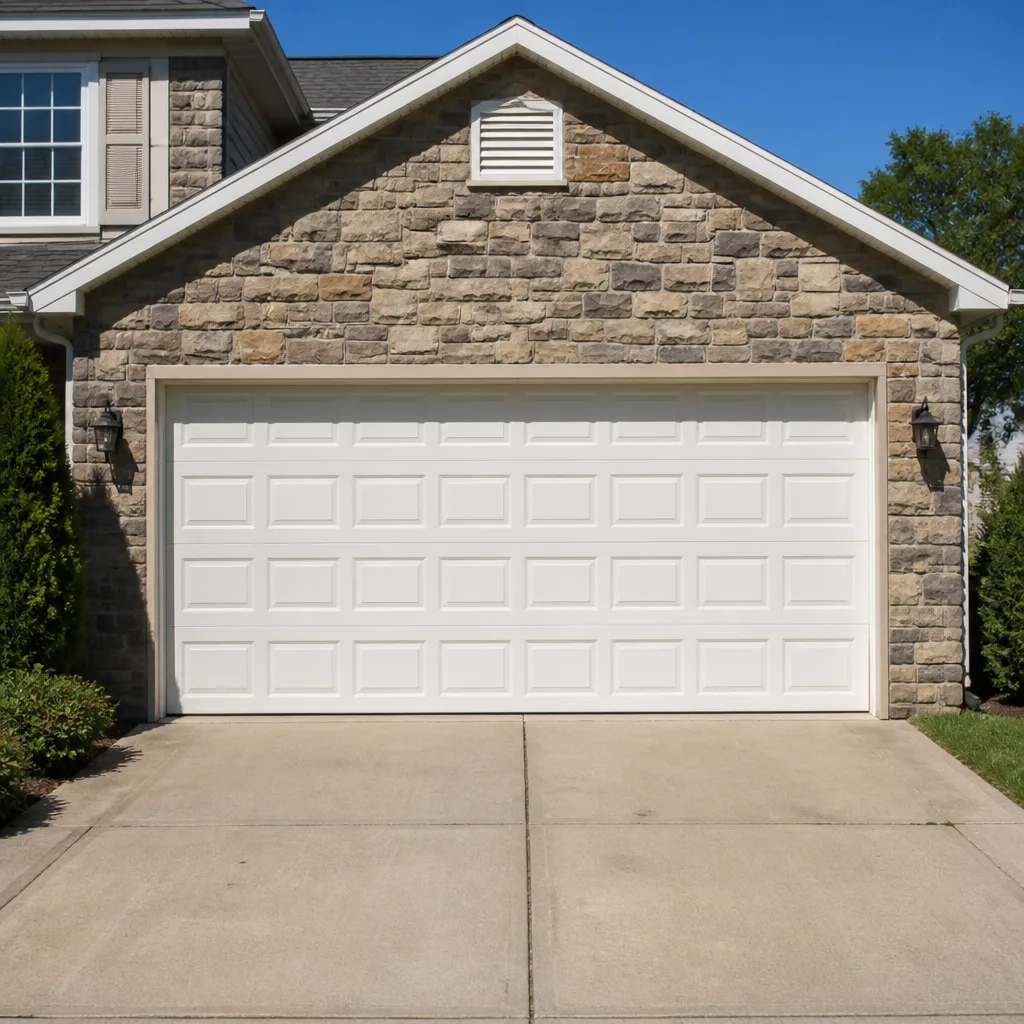 Raised-panel steel
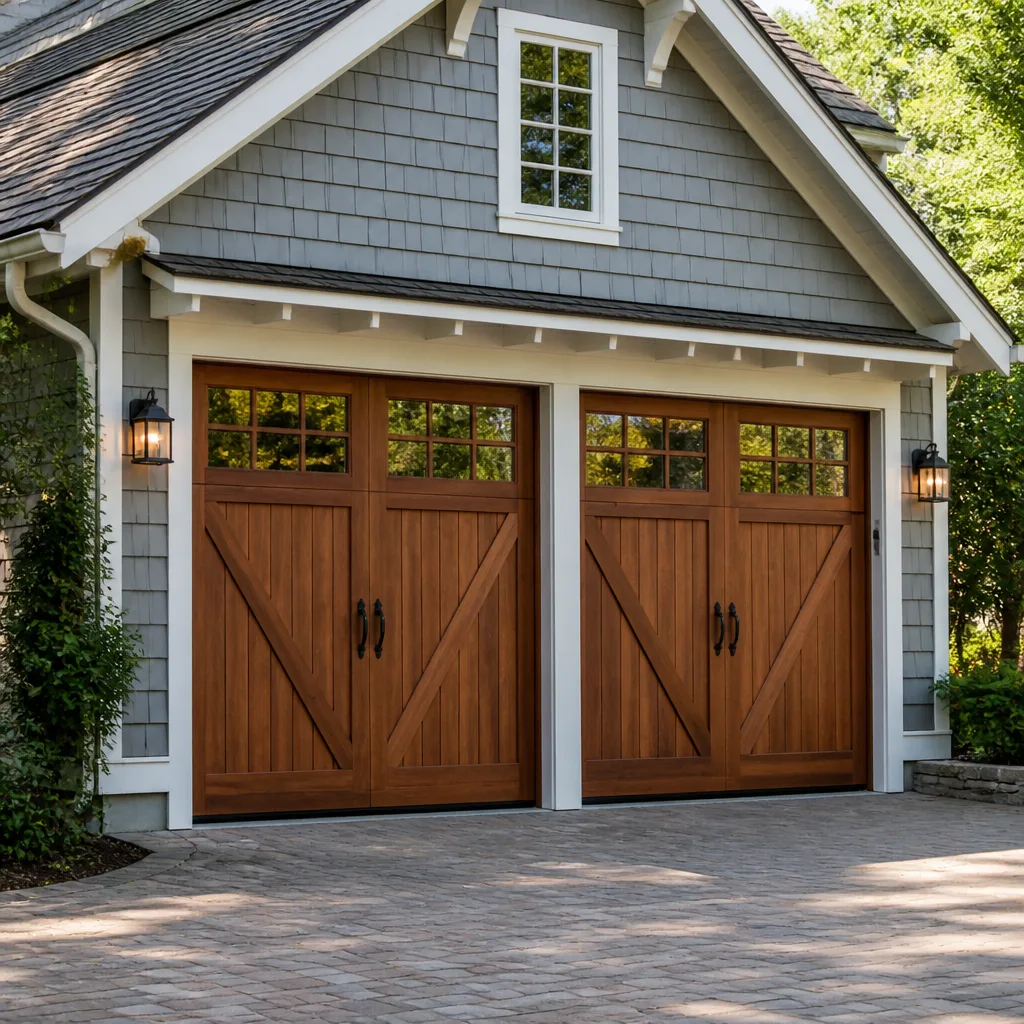 Carriage house
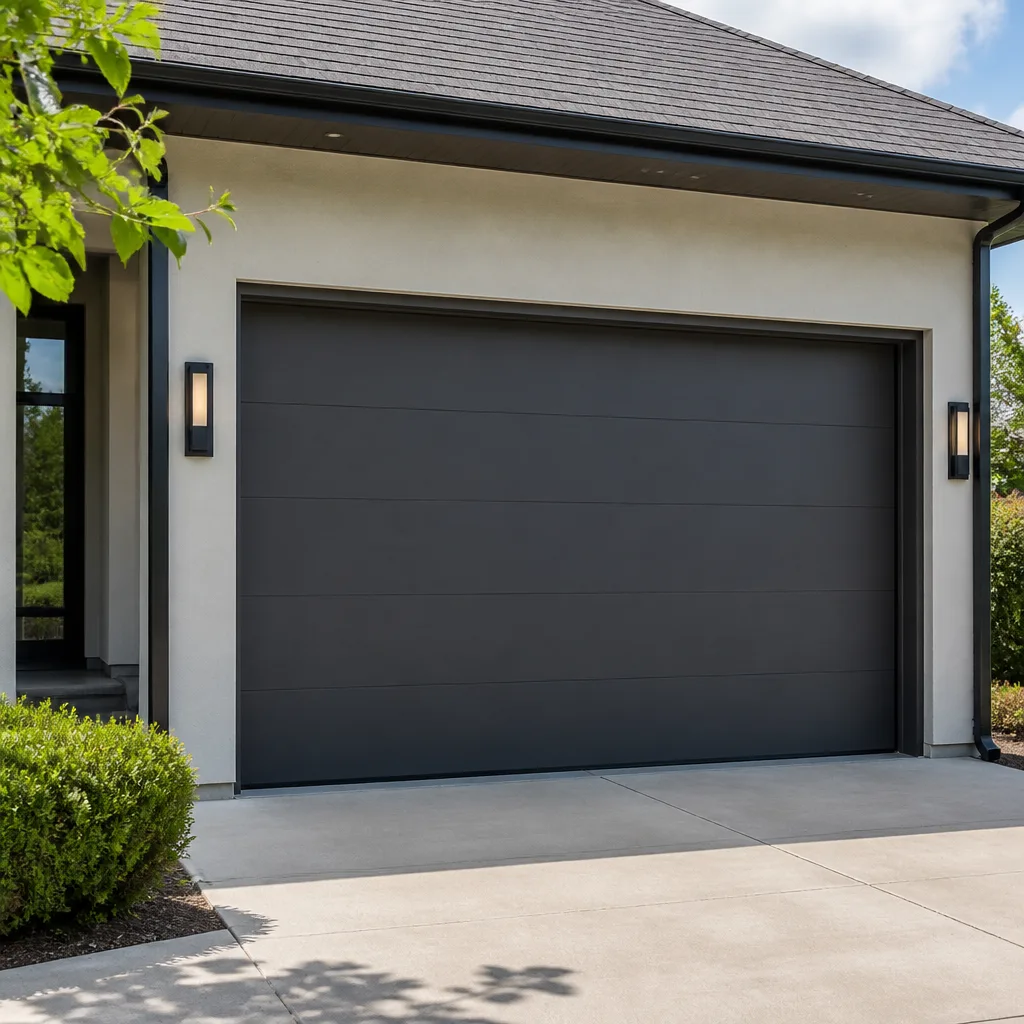 Modern flush
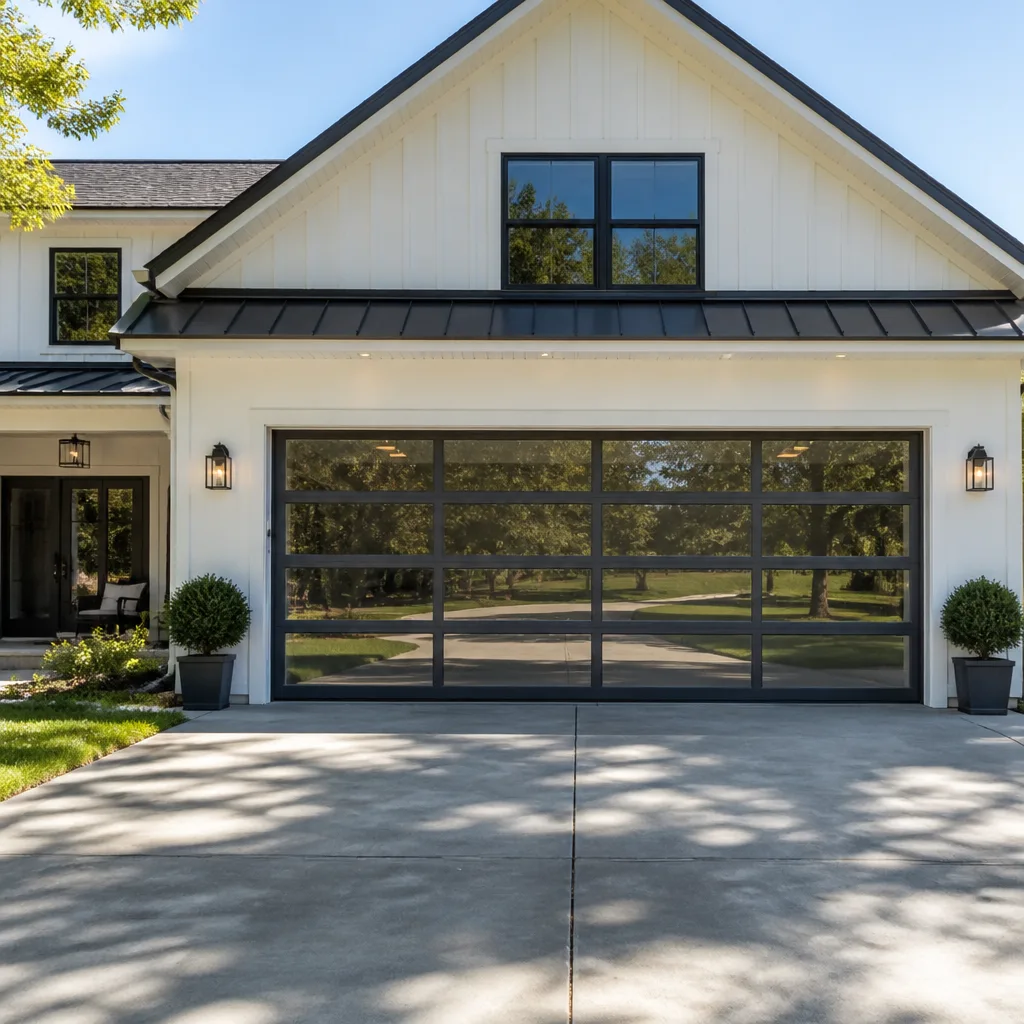 Full-view glass
 LiftMaster openers
 Chamberlain openers
Full 25-point door and opener safety check with every visit - springs, cables, rollers, tracks, and your LiftMaster or Chamberlain opener included
You get a price before we start. It does not change when the pro arrives.
Get your free estimateHow to Hire a Garage Door Contractor in Pembroke Pines: A Step-by-Step Guide
Most homeowners shop for a garage door contractor the same way they shop for a refrigerator: they look at the price and the reviews. That approach works fine for appliances. It fails badly for garage doors, and it fails worst in South Florida, where the gap between a legitimate operator and a convincing fake is often a single piece of paper. After Hurricane Irma, Florida’s Department of Business and Professional Regulation logged hundreds of complaints against garage door contractors operating without a Broward County license. Many of those operators had polished websites and five-star reviews. A lot of homeowners learned the hard way that neither means much on its own. This guide walks through what actually protects you when you hire someone to work on your door in Pembroke Pines: the license class that matters, how to check it, the questions that expose whether a contractor can honor a warranty, and how to get the job written down so there are no surprises.
Quick Answer
To hire a garage door contractor in Pembroke Pines, verify the contractor holds a current Florida state license in the right class and can pull a Broward County permit for the work, get the scope and price in a written contract before anything is ordered or removed, and confirm in writing that the contractor is authorized to perform warranty repairs on your specific door or opener brand. Ask for the license number, check it yourself on the DBPR website, and never accept a quote that skips the permit.
Styles & brands we work with
- Raised-panel steel
- Carriage house
- Modern flush
- Full-view glass
- LiftMaster openers
- Chamberlain openers
Table of Contents
- What license does a garage door contractor need in Florida?
- How do you verify a contractor on the DBPR website?
- Why does Broward County permit authority matter?
- The five questions to ask before anyone touches your door
- Red flags specific to the South Florida market
- How to structure the job in writing
- Repair, replace, or install new: matching the job to the right contractor
- What’s different about garage doors in Pembroke Pines
What license does a garage door contractor need in Florida?
A garage door contractor in Florida needs to hold a state license issued through the Department of Business and Professional Regulation. Garage door installation and repair falls under the specialty contractor framework the state regulates, and the license class your contractor holds tells you what work they are legally permitted to perform. The license number should appear on their estimate, their vehicle, and their written contract. If you have to hunt for it, that’s already a signal.
Here’s what matters for a Pembroke Pines homeowner specifically: a Broward County local specialty license or a state-certified specialty license both put the contractor on the DBPR registry, but only one of those two paths gives them automatic authority to pull permits across county lines. If a contractor tells you they’re licensed but can’t articulate which class, treat that as a no. The plain-language version is this: the license is the floor, not the ceiling. Above the license sits permit authority, insurance, and manufacturer authorization, and a contractor who’s missing any of those three is not fully equipped to work on your door.
We work in a market where unlicensed door work is common enough that it’s not a fringe problem. That’s the reason a license check has to be your first step, not your last. In Pembroke Pines, where a large share of homes use the garage as a primary entry point, a contractor who isn’t legitimately licensed can leave you with a door that operates but doesn’t pass a future inspection, and the exposure stays with you, not with them.
What the license check actually tells you
- It confirms the contractor is accountable to a state regulator. Licensed contractors face discipline that unlicensed operators do not.
- It establishes whether they can pull a permit. Permit authority flows from licensing, and a contractor without it will ask you to handle the permit yourself or skip it entirely.
- It signals whether the contractor carries required insurance. The license and the insurance are separate, but you can ask for both at once and a legitimate contractor will have both ready.
How do you verify a contractor on the DBPR website?
You can verify any Florida contractor’s license on the DBPR website in under two minutes, and you should do it every single time, even if the contractor was recommended to you. The site lets you search by name, license number, or business name. What you’re looking for is a status of “Current, Active,” the correct license class for the work, and no disciplinary history that jumps out at you.
Here’s the process, step by step:
- Get the license number in writing. Ask for it, then check that the number on the estimate matches the number on the DBPR site. Mismatches are the simplest fraud to spot and the easiest to miss.
- Search the DBPR website by license number. Searching by number is faster and more reliable than searching by business name, because business names can be close copies of one another.
- Check the license class against the work. If they don’t hold a class that covers garage door installation or service, they aren’t permitted to do the job.
- Check the status and expiration date. A license that expired three months ago is not a license.
- Look for disciplinary actions. A single complaint is not disqualifying. A pattern is.
Do this before you let anyone measure your door, let alone order a panel. In Pembroke Pines, we’ve seen homeowners reverse-engineer a license check after the fact and discover the operator wasn’t registered. That’s an expensive order to learn things in. The DBPR search takes less time than reading this paragraph. If you want to skip the research entirely and work with a contractor who can produce license and insurance documentation when you ask, our Pembroke Pines Garage Door Repair Co team can provide what you need for the check.
Why does Broward County permit authority matter?
Broward County permit authority matters because it’s the single best indicator of whether a contractor plans to do the work correctly or cut corners. A contractor who can pull a permit has to submit plans, has to meet inspection, and has to stand behind the installation to a code official. A contractor who can’t pull a permit, or who offers to skip it, is telling you something specific: the work won’t be inspected by anyone. That’s the difference between a door that was installed and a door that was installed correctly.
For a garage door replacement in Pembroke Pines, most installations touch structural anchoring, springs, and the opener’s electrical connection, and those are the components a permit inspection is designed to catch. The permit also creates a public record of the work. If you sell the home, that record matters. If the door ever fails, that record matters even more.
What to ask about permits:
- “Will you pull the permit, or will I?” The correct answer is always that the contractor pulls it. If you’re asked to pull it as a homeowner, you’ve lost your protection.
- “Is the permit fee included in this quote?” It should be stated clearly, either as a line item or in writing as included.
- “What happens at inspection?” A contractor who’s done this work in Broward County should be able to explain the inspection sequence without hesitation.
If you want the technical rules for a specific property, call the City of Pembroke Pines building department or Broward County’s permitting office directly. The rules depend on the scope of the job and the age of the home, and the building department is the source of truth. Don’t let a contractor tell you what the permit rules are. Confirm it yourself.
The five questions to ask before anyone touches your door
Five questions separate a contractor who can actually do the job from one who is good at sounding like they can. None of the questions are aggressive. All of them should be easy for a legitimate contractor to answer.
- “What’s your license number and can I confirm it on DBPR?” A legitimate contractor will hand it over without blinking. A hesitation here is a full stop.
- “Do you hold manufacturer authorization for my brand?” This is the question most homeowners don’t know to ask. Manufacturer authorization determines whether the contractor can perform warranty repairs on your door or opener without voiding coverage. If your door is a Clopay or Raynor and the contractor isn’t authorized to work on it, a warranty claim on a failed panel or a bad spring can be denied. We work on the brand you already own, and we hold service authorization across eight major brands including LiftMaster, Chamberlain, Genie, Clopay, Amarr, Wayne Dalton, Craftsman, and Raynor. If a contractor can’t name the brands they’re authorized for, assume they’re not authorized for any.
- “Will you pull the permit?” Covered in the section above. Ask it out loud.
- “Can you give me the insurance certificate?” General liability, and if they’ll have employees on your property, workers’ comp. Both should be available on request.
- “What’s your written scope and price?” If they can’t produce a written contract with the parts, labor, permit, and disposal costs broken out, the price is not a price. It’s an opening bid.
Ask all five in the first conversation. You’ll know within five minutes whether you’re talking to a contractor or a salesperson. If you’re evaluating a spring failure or a dead opener and want to move quickly, remember that speed is not the same as skipping verification. Call us and we’ll walk through the answers with you. Our team is reachable at (855) 529-2078, and we’re willing to spend the call on verification questions even if you don’t hire us.
Red flags specific to the South Florida market
South Florida has a particular set of contractor red flags that don’t show up the same way in other markets. Storm-chasing crews, cash-only pricing, and “we can skip the permit” offers are three of the most common. All three are designed to sound convenient. All three leave you holding the risk.
Storm-chasing out-of-state crews
After a named storm, crews from other states show up door-to-door offering garage door repair. Some are legitimate. Many are not licensed in Florida, can’t pull a Broward County permit, and will be gone before the next named storm arrives. The way to protect yourself is simple: ask to see the Florida license and verify it on DBPR. A crew that’s licensed here will pass that check easily. A crew that isn’t will find reasons to change the subject. It doesn’t matter how clean the truck looks or how well the crew knows the local streets.
Cash-only pricing after a quote
A contractor who quotes one price and then offers a discount for cash on the day of the work is creating a record-free transaction. You lose the paper trail, you lose the ability to dispute a charge, and you have no proof of what was agreed if the door fails. Cash is fine as a payment method. Cash-only, after the fact, with no invoice, is not.
“We can skip the permit”
This one is the most direct signal of intent. A contractor offering to skip the permit is telling you they don’t plan to be inspected. On a garage door replacement in Pembroke Pines, the permit is your assurance that the anchoring and spring system meet code. Skip it and you’re relying entirely on the contractor’s word, which is exactly the thing that isn’t working.
Additional red flags worth knowing
- Reviews that were all collected in the same week. Look at review dates, not stars. A brand-new business with a perfect rating from a burst of reviews is a warning, not a reassurance.
- Quotes given without looking at the door. A garage door quote requires a measurement and a look at the existing hardware. Phone quotes without seeing the door are guesses.
- Pressure to sign on the spot. A legitimate contractor doesn’t need a same-day signature. The door isn’t going to disappear overnight.
- A business address that turns out to be a mailbox or a residence. It’s worth a look. A licensed contractor will have a real business address on file with the state.
- Refusal to put the scope in writing. If the estimate is verbal, walk away.
How to structure the job in writing
A legitimate garage door contract in Pembroke Pines should include the license number, the permit responsibility, a line-item scope of work, brand and model numbers for any door panels, springs, or openers being installed, a total price with the permit and disposal fees stated separately, the payment schedule, the warranty terms, and a start and finish window. If any of those are missing, the contract isn’t finished.
Here’s what a solid written contract for garage door repair or installation should contain:
- Contractor’s legal business name and license number, matching the DBPR record.
- Permit acknowledgment. Who pulls it, whether the fee is included, and what happens if the work fails inspection.
- Line-item scope of work. Not “repair garage door.” Instead: “Replace one torsion spring, matched pair, model X, rated for the existing door weight.”
- Brand and model numbers for every part being installed. This is what protects warranty claims later.
- Total price with a breakdown of labor, parts, permit, and disposal. The written estimate sets the final price; if the scope changes after the door is opened up, the contractor should stop and get written approval before proceeding.
- Payment schedule. A reasonable deposit before the work begins, with the balance due after the door is operating and inspected. A full payment up front for a scheduled install is a red flag.
- Warranty terms. Labor warranty length, parts warranty length, and whether either transfers if you sell the home.
- Start and finish window. For a scheduled installation, this is the realistic range, not a promise. For a repair, this is the day the work begins.
- Lien release or final waiver. Confirms that the contractor has paid their suppliers and you aren’t exposed to a mechanic’s lien on your home.
Ask for a written estimate and compare it line by line with any competing quote. If one quote is significantly cheaper than another for the same scope, one of the two is missing something. Usually it’s the permit, the disposal, or a cheaper grade of hardware.
Repair, replace, or install new: matching the job to the right contractor
Not every garage door job needs the same contractor skill set, and knowing which job you have is half of hiring well. Repair, installation, and new construction each put different demands on the contractor.
If your door is broken or stuck, you need a contractor set up for garage door repair, not a general handyman. Spring failures, cables, rollers, and track alignment are the most common Pembroke Pines repair calls, and they’re all safety-critical. A torsion spring under tension can cause serious injury if it’s handled without the right tools and training. This is a component to hand off to a trained technician, not a weekend project. We flag this because spring work is mishandled often enough that it’s worth saying plainly: if the spring is the problem, stop and call.
If the opener is the problem, you need one that understands opener electronics as a separate discipline from the door itself. Openers and doors are two different mechanical systems that happen to work together. A technician who can rebuild a door doesn’t automatically know the logic board on a LiftMaster or Chamberlain unit. If your opener is the issue, look for garage door opener repair as a distinct service, and ask what brands the contractor is authorized to service.
If you’re replacing the door itself, you’ll be working with a contractor on garage door installation. Installation is measured, ordered, and scheduled. There’s no same-day promise on a new door, because the door has to be measured, ordered from the manufacturer, and sequenced with a permit. Expect a free measure visit and a written price, then a scheduled installation day. The reason to hire a specialist for this part is simple: an installer who works with multiple brands can recommend the right door for your opening instead of trying to fit you into a single manufacturer’s catalog.
How to tell which job you have
- Door won’t move, spring looks broken, door is stuck off-track: repair call. Same-day service and emergency service are relevant here.
- Door moves fine but the opener beeps, reverses, or won’t respond: opener repair call.
- Door panels are dented, rusted, or the door is very old and parts are no longer available: replacement. Schedule a measure.
- You want a new door or opener installed on a new opening or a home with no existing door: installation. Schedule a measure and expect a delivery window.
If your job is an emergency, tell the person on the phone exactly what’s happening. A broken spring is a different call than a dead opener. Matching the right technician to the right problem saves you a diagnostic fee and a follow-up visit.
What’s different about garage doors in Pembroke Pines
Pembroke Pines is a city where the garage is a primary entry point for a lot of households. Not a secondary storage bay. The front door. That changes what downtime means for a family here, and it changes what matters when you’re hiring. A door that’s stuck open is a security concern overnight. A door that won’t close is a problem you can’t defer to next week.
The housing stock here also matters. A lot of Pembroke Pines homes were built across several decades, and the garage door systems reflect that: some older doors with parts that are no longer made, some newer doors with high-cycle openers, some on their second or third opener. A contractor who only installs new doors can’t help the household with a 12-year-old door that needs a spring and a set of rollers. The city needs contractors who can work on both the door and the opener, on brands that were current ten years ago as well as brands that are current now. That’s why we cover Craftsman and Raynor service alongside LiftMaster and Chamberlain work. The brand on your door doesn’t have to be the brand we install for us to work on it.
Our technicians have up to 11 years of experience in this trade, and the pattern we see in Pembroke Pines is consistent: the door problems that turn into expensive problems are the ones that were deferred. A spring that’s been making noise for weeks. A door with a loose hinge. A roller that’s started to squeak. Those small issues get more expensive the longer they’re left alone, and they get much more expensive if an unlicensed operator was the one who “fixed” them the first time.
The final piece of local context: this is a market where door work is heavily marketed and not always heavily regulated in practice. That’s the reason the entire hiring process, from license check to written contract, matters more here than it might in a city where the contractor market is smaller and easier to keep track of. Pembroke Pines rewards a homeowner who asks questions. The answer you get tells you everything.
Common Mistakes to Avoid
- Hiring on reviews alone. Reviews are cheap to buy and easy to fake. The DBPR record is not. Check the license before you read the reviews.
- Skipping the permit to save a fee. The permit fee is a small fraction of the job, and the inspection it triggers is the only third-party check on installation quality. Skipping it is the most expensive savings in this trade.
- Accepting a verbal quote. If the scope and price aren’t in writing with the parts listed, you don’t have a quote. You have a conversation.
- Assuming all contractors can do warranty work. Manufacturer authorization for your specific brand is what turns a warranty claim from “approved” to “denied.” Ask before the work starts, not after.
- Treating a spring as a DIY job. Torsion springs are under high tension. The professionals handle them because the professionals have the right tools. A homeowner with a socket set is a hospital visit waiting to happen.
- Letting an out-of-state storm crew into the driveway without checking their Florida license. If they can’t show you the license number, they’re not licensed to work in Broward County.
- Paying the full balance before the door operates. A final payment held until the door has been tested and the inspection has been signed off is normal. Full payment up front is not.
See the difference
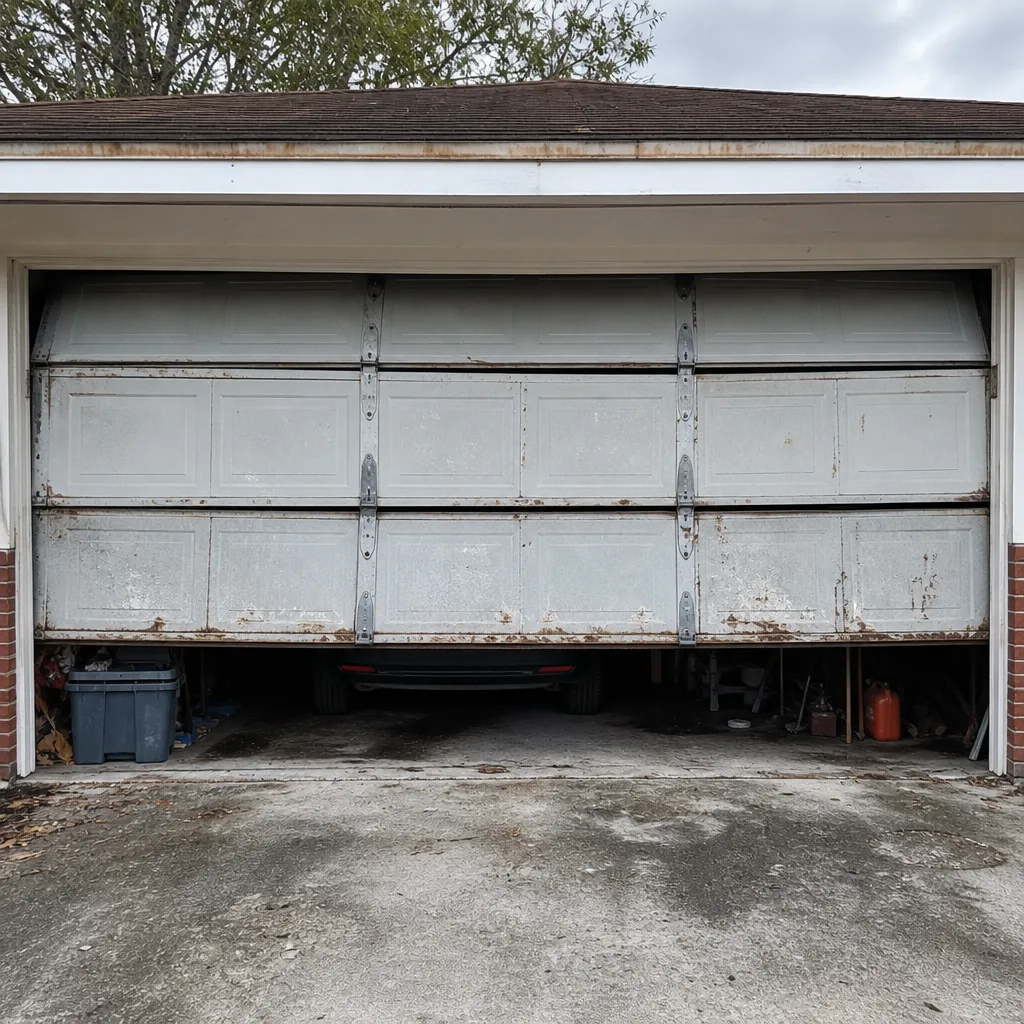 Before
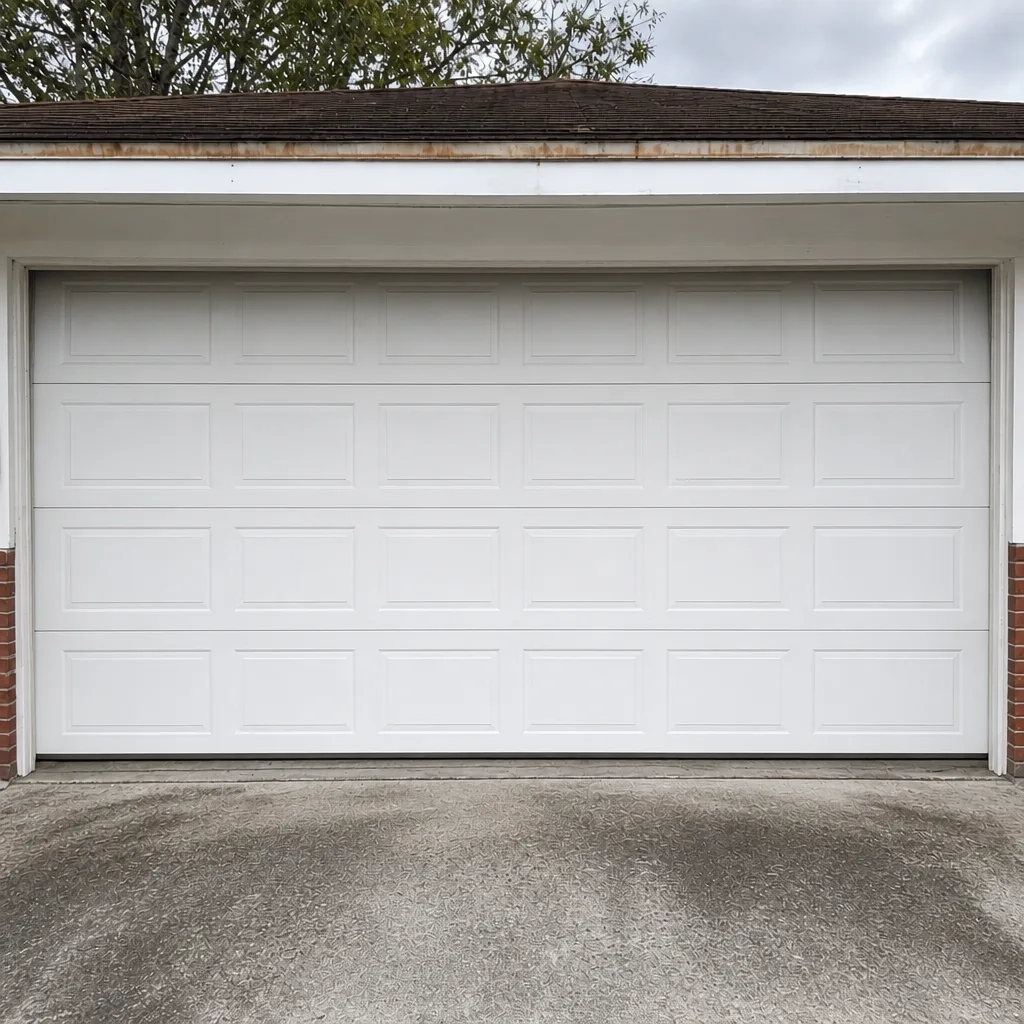 After
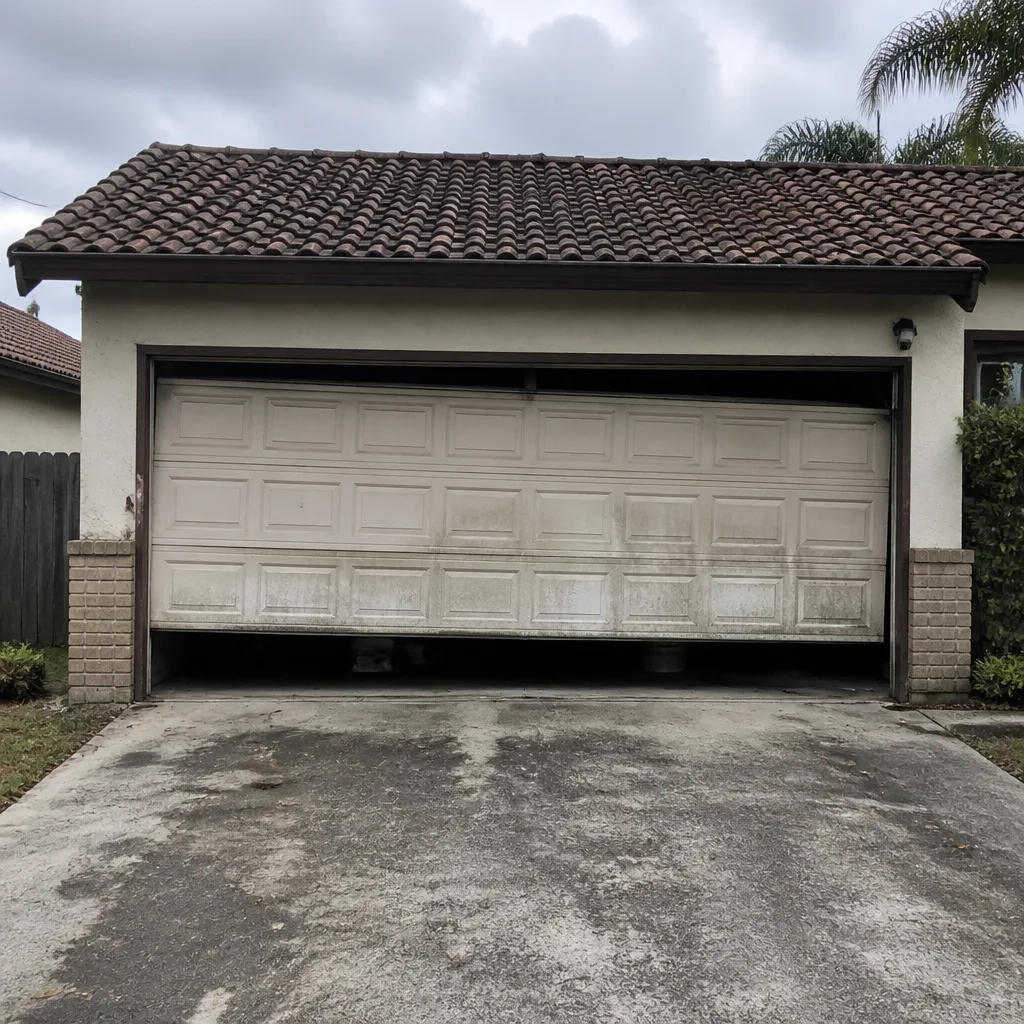 Before
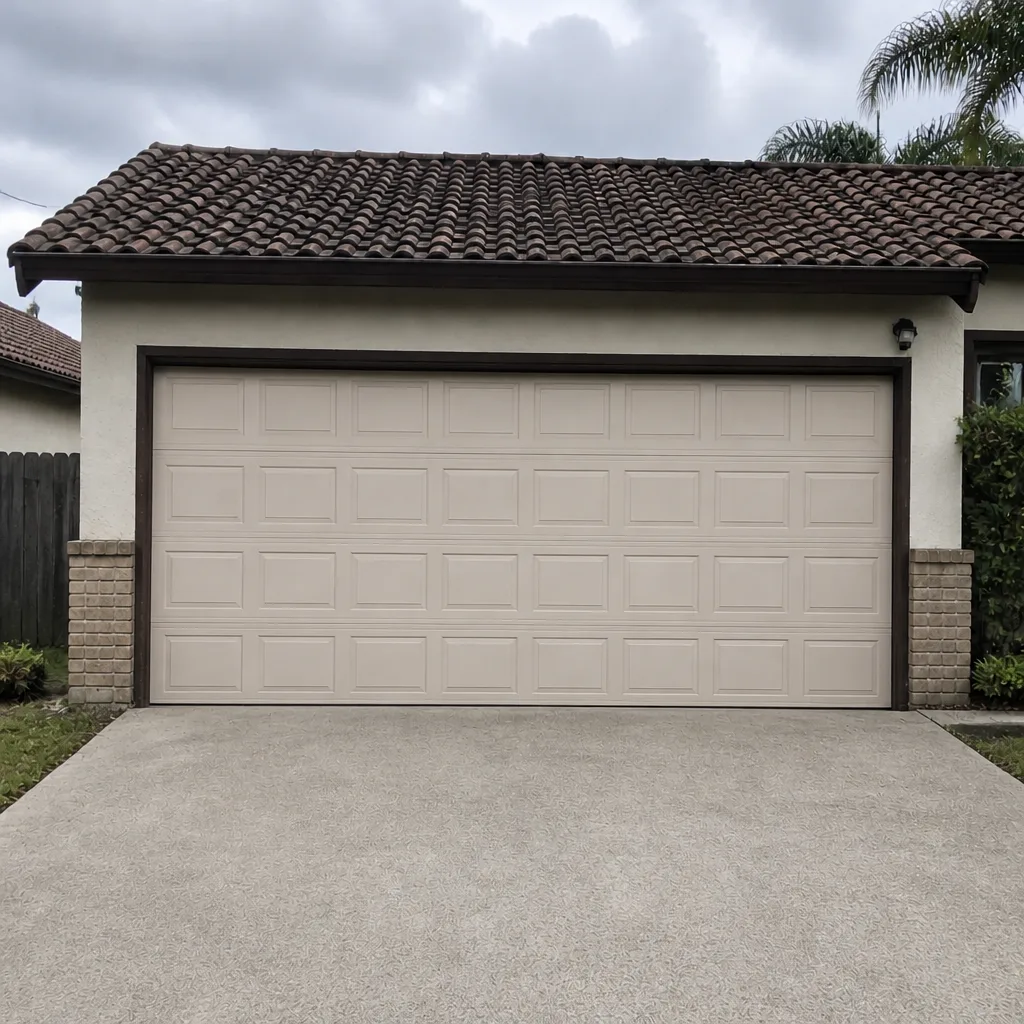 After
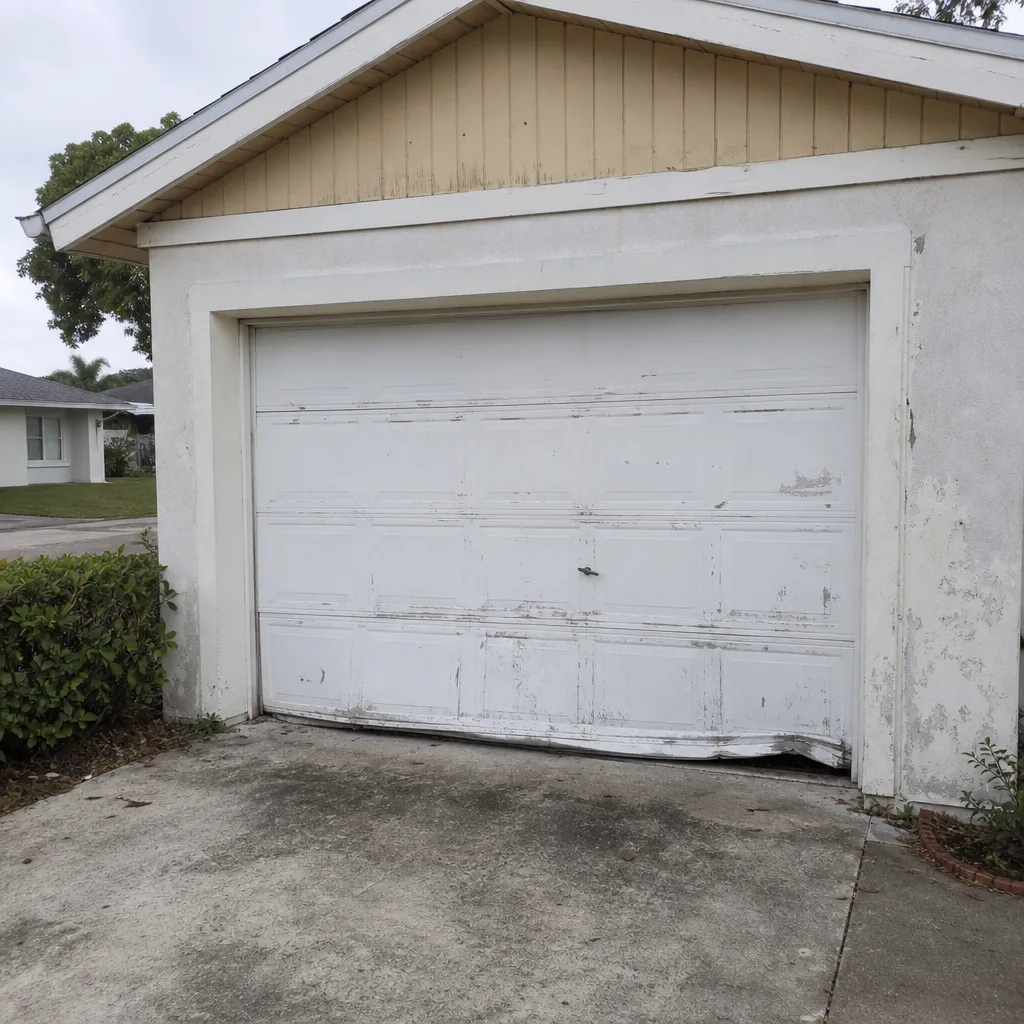 Before
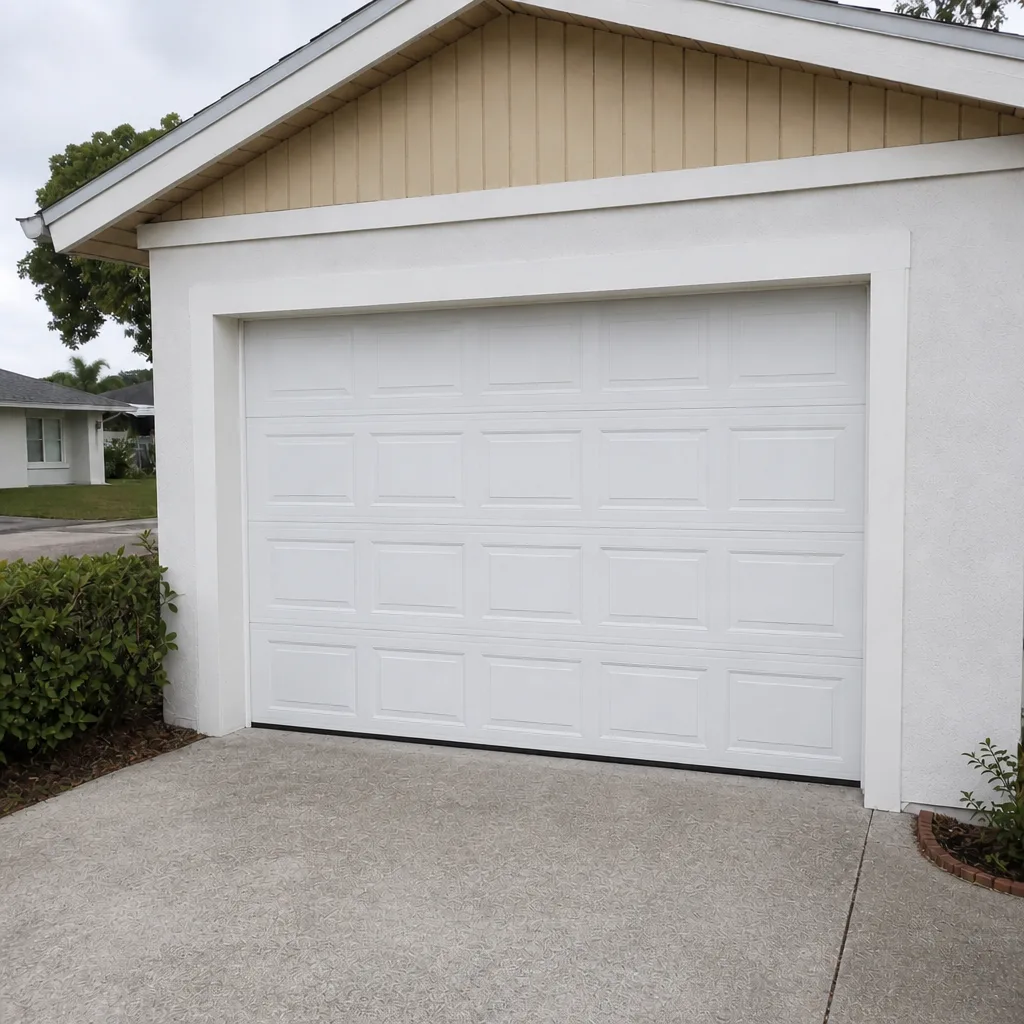 After
When to Call a Professional
Call a professional when the spring breaks, when the door won’t close, when the opener reverses on its own, when a panel is off-track, or when the door hangs unevenly on one side. Call immediately if the door is stuck open overnight, if you see a broken cable, or if the door has dropped and won’t lift. Do not attempt to release a door that’s under spring tension yourself. Do not try to adjust cables or springs without the right tools. The safest thing you can do when a garage door fails is to stop using the door and call a technician who has the training and equipment to handle spring systems safely.
Pembroke Pines Garage Door Repair Co offers free estimates in Pembroke Pines. We handle repair, opener repair, spring repair, installation, and emergency service on the brand of door or opener you already own across eight major brands, and the work is quoted and agreed before anything starts. Call (855) 529-2078.
Frequently Asked Questions
Hire a licensed garage door specialist who can pull a Broward County permit and is authorized by the manufacturer of the door being installed. A general handyman can’t pull the permit, can’t provide manufacturer warranty coverage, and usually can’t lift or handle a garage door safely. Confirm the license number on the DBPR website before you sign anything. Call (855) 529-2078 for a free estimate and we’ll walk through the verification steps with you.
Go to Florida’s DBPR website and search by the license number the contractor gives you. Check that the license is current, that it’s in a class that covers garage door work, and that there are no recent disciplinary actions. If the number doesn’t turn up, or it belongs to a different business name, stop. Call (855) 529-2078 if you want a contractor whose license and insurance documentation you can verify before the first visit.
Yes. A contractor who offers to skip the permit is telling you the work won’t be inspected, and that’s the whole point of the permit. In Pembroke Pines, a garage door replacement should be permitted through the city or county, and the contractor should be the one pulling it. Ask who is responsible for the permit in writing, and don’t accept “we can skip it” as an answer. Call (855) 529-2078 if you want a free estimate that includes the permit correctly.
Yes, if you want warranty work to be honored. Manufacturer authorization determines whether a contractor can perform warranty repairs without voiding your coverage. A contractor who isn’t authorized for your brand can still do the work, but the manufacturer may decline a warranty claim on the parts. Ask which brands the contractor is authorized for. The authorized list should include the brand on your door. Call (855) 529-2078 to confirm authorization for your specific model before work begins.
A proper contract should list the contractor’s license number, the permit responsibility, a line-item scope of work with brand and model numbers, the total price with permit and disposal stated separately, the payment schedule, the warranty terms, and a start and finish window. If any of those are missing, ask for a revised quote before you sign. Call (855) 529-2078 for a written estimate that includes all of it.
Yes, for repair and emergency calls on broken springs, dead openers, and doors stuck off-track. Installation and replacement are scheduled jobs because the door has to be measured, ordered, and permitted, so those don’t happen same day. If your door is failing right now, call (855) 529-2078 and describe what’s happening so we can route the right technician. Estimates are free.
The written estimate sets the price. If the scope changes after the door is opened up, the contractor should stop and get your written approval on any change before doing additional work. A legitimate contractor won’t surprise you with a larger invoice at the end. If they can’t explain in writing why the price changed, don’t pay the difference. Call (855) 529-2078 for a free estimate that’s locked to the written scope.
The Bottom Line
Hiring a garage door contractor in Pembroke Pines comes down to verification. Check the license on DBPR. Confirm the contractor can pull a Broward County permit. Ask about manufacturer authorization for your specific brand. Get the scope, price, and payment schedule in writing. Refuse the permit-skip offer, refuse the storm-chasing crew that can’t prove a Florida license, and refuse the cash-only transaction with no invoice. Those five steps protect you more than any review score, and they take less than an hour total. If you want to work with a specialist that services the full range of repair, opener repair, spring repair, and installation, or you need emergency service today, call Pembroke Pines Garage Door Repair Co at (855) 529-2078 for a free estimate. We’ll verify the details with you, then give you a written price before anything is touched.
Written by the team at Pembroke Pines Garage Door Repair Co.