Last updated November 22, 2026
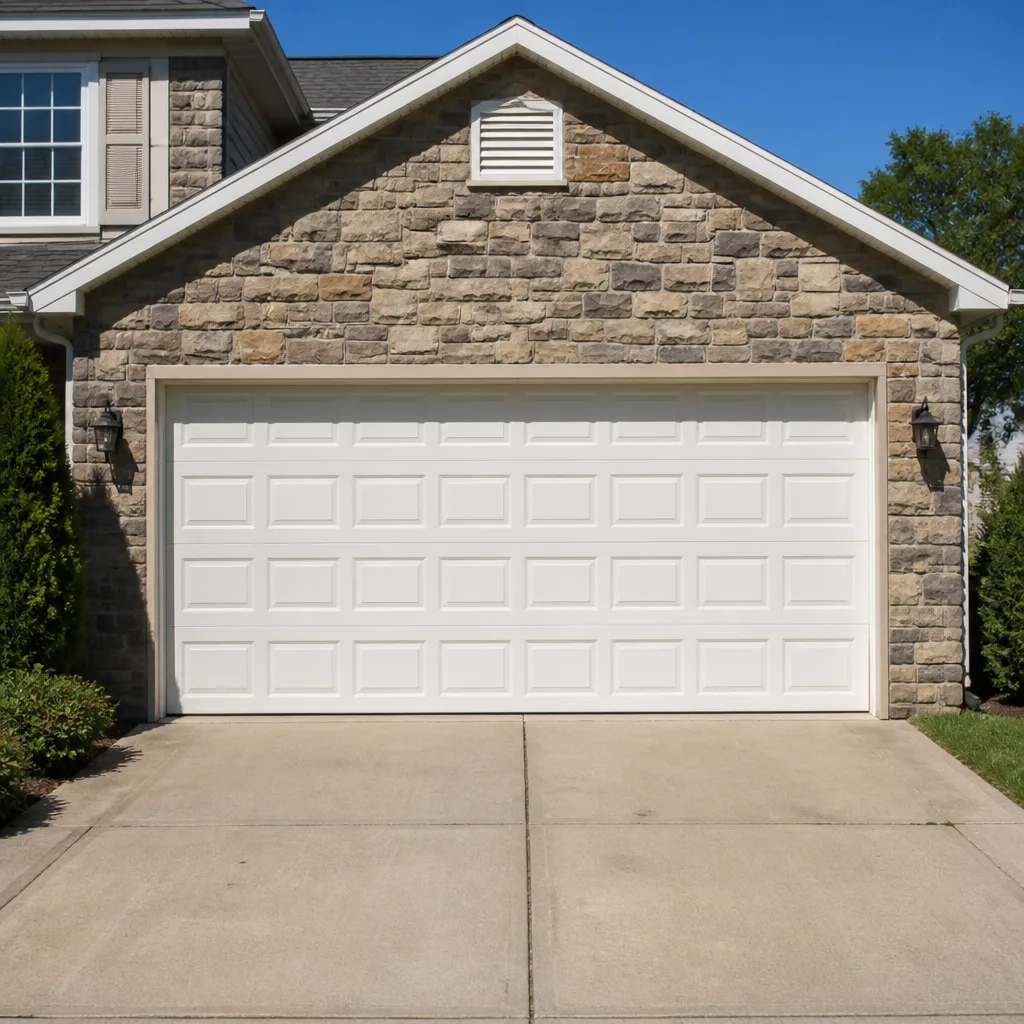 Raised-panel steel
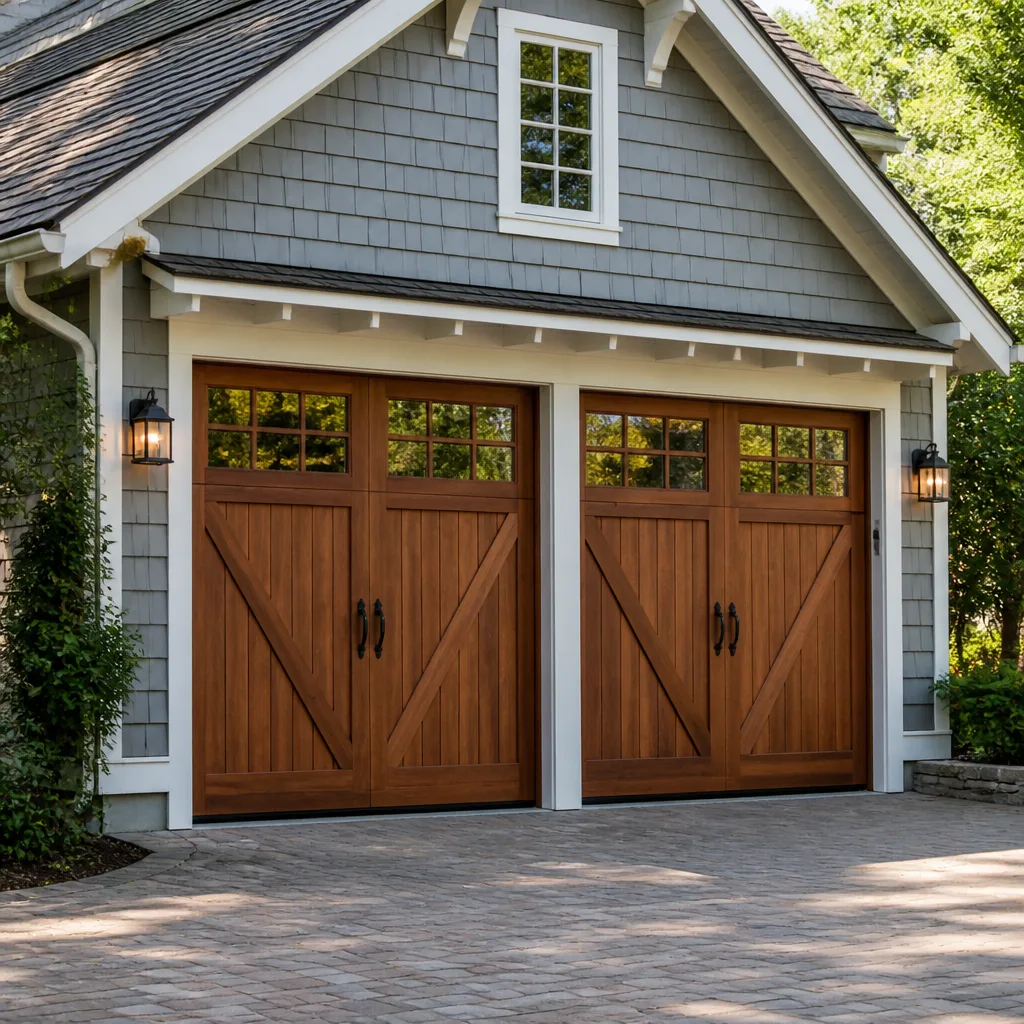 Carriage house
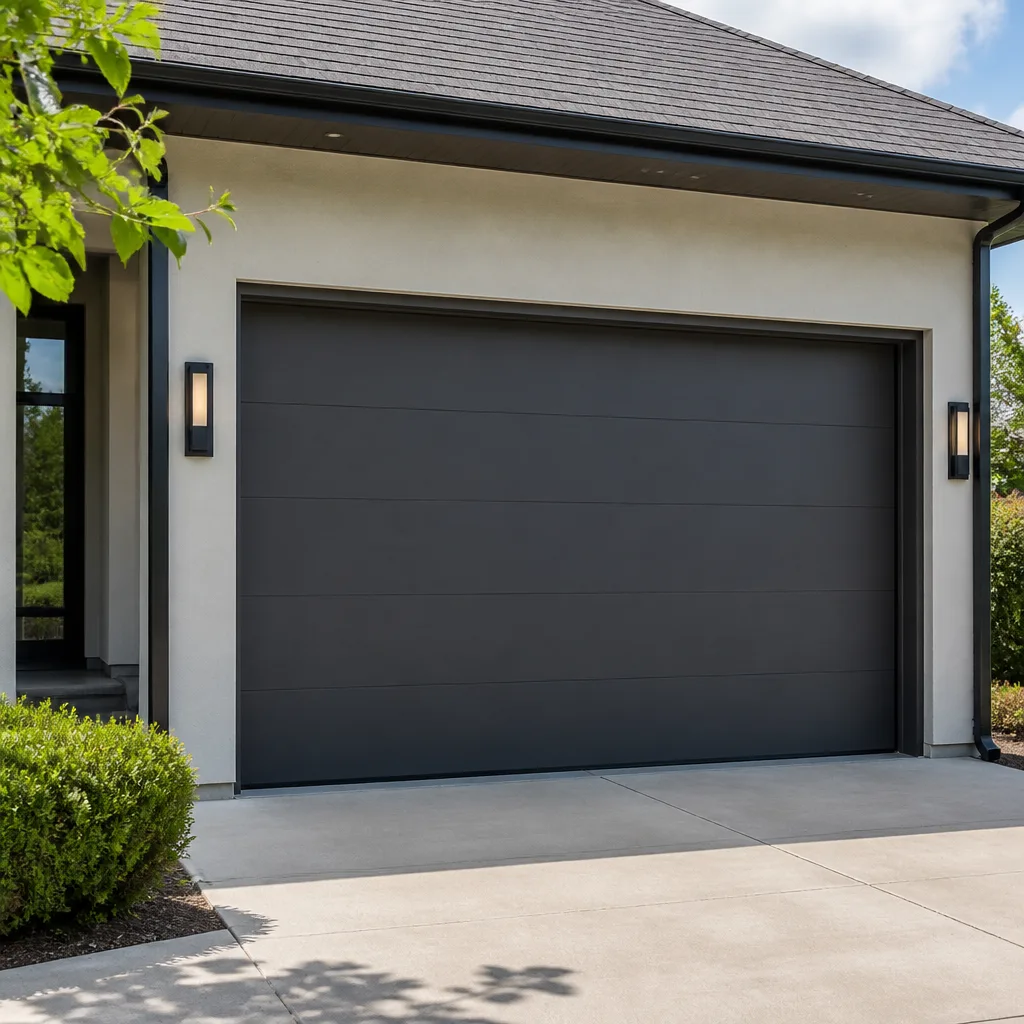 Modern flush
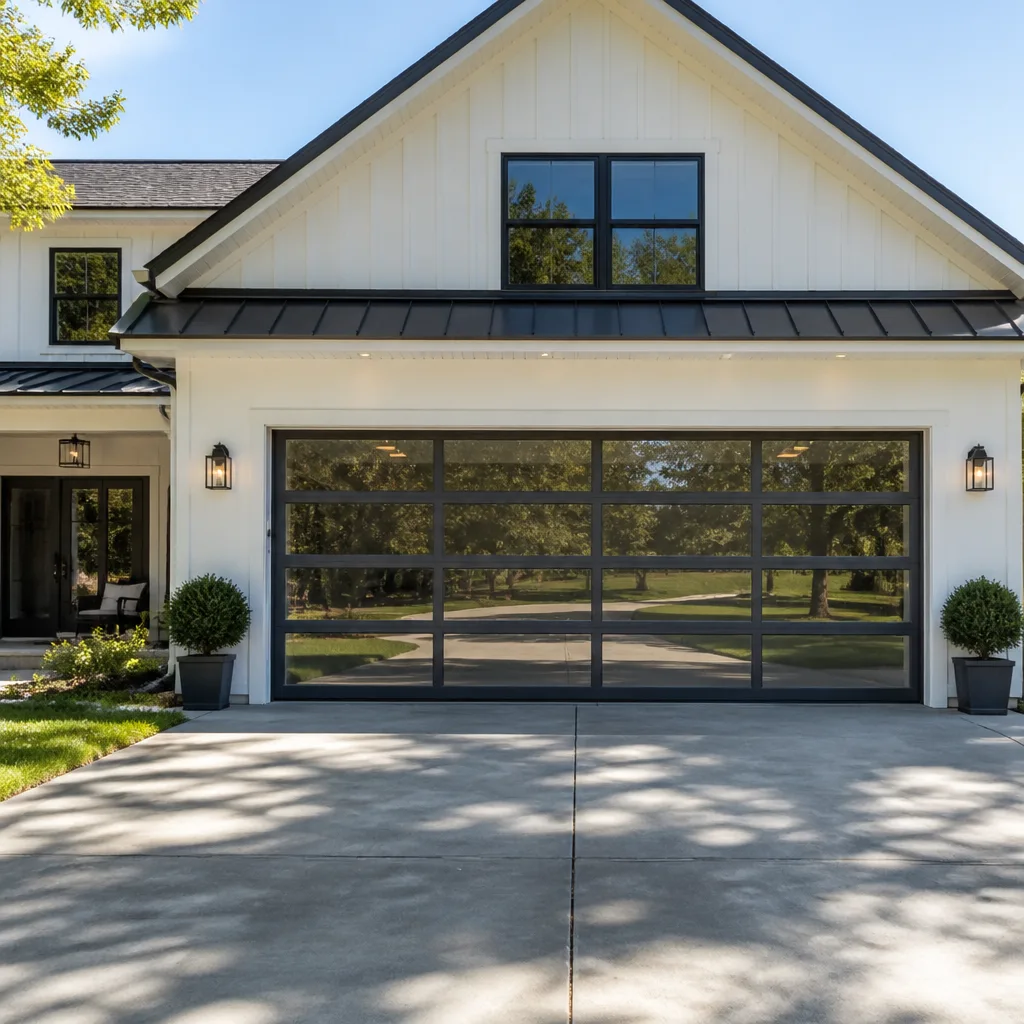 Full-view glass
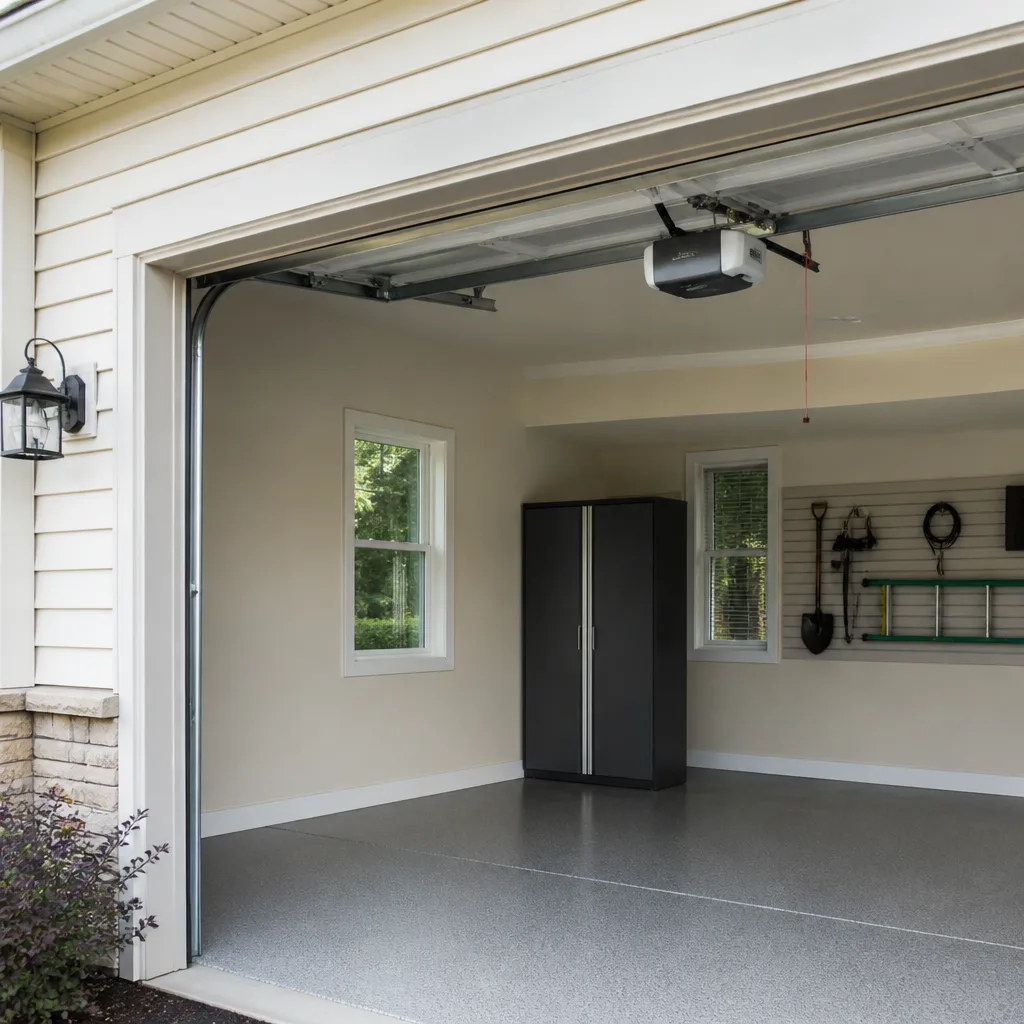 LiftMaster openers
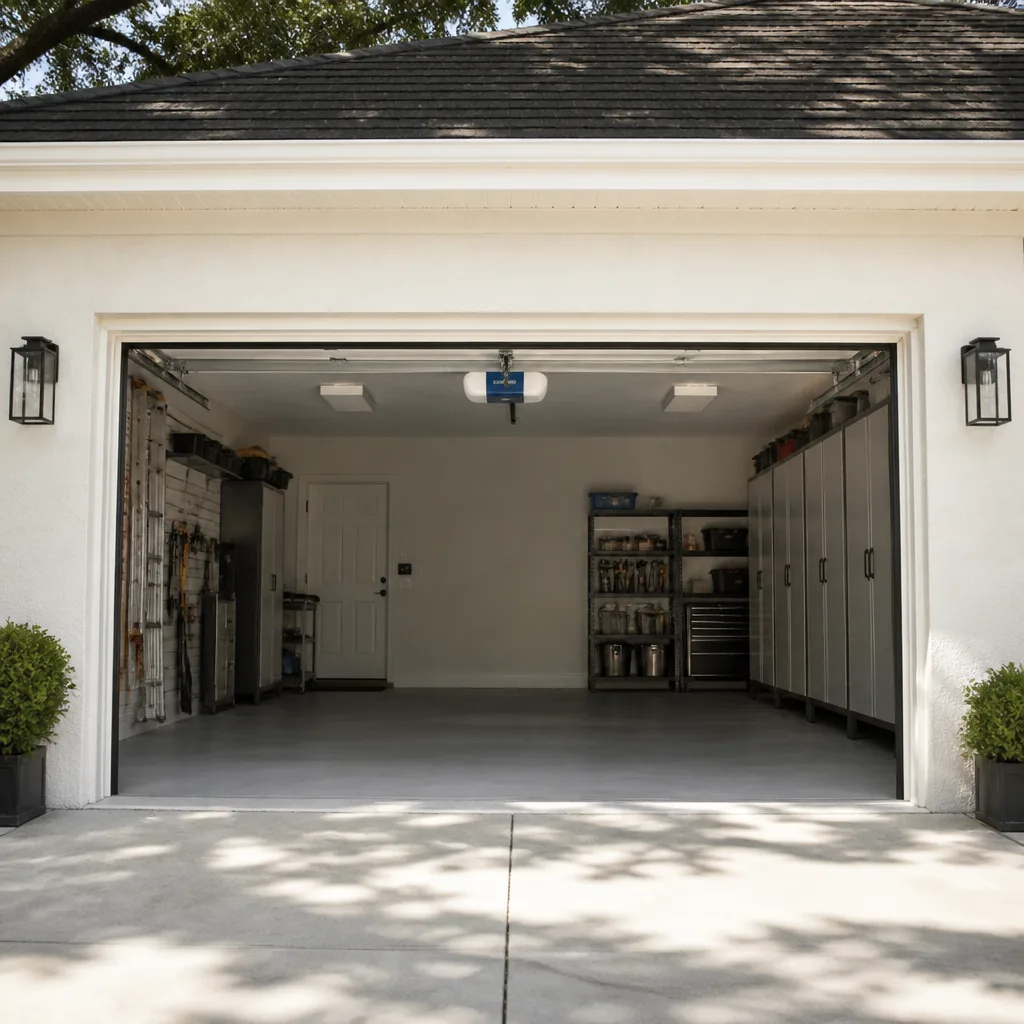 Chamberlain openers
Full 25-point door and opener safety check with every visit - springs, cables, rollers, tracks, and your LiftMaster or Chamberlain opener included
You get a price before we start. It does not change when the pro arrives.
Get your free estimateSeasonal Garage Door Care for Pembroke Pines: Year-Round Homeowner’s Guide
Most garage door maintenance calendars are built for places that get cold. They tell you to prep for winter, check for ice, and spring-clean when the thaw comes. Pembroke Pines doesn’t run on that clock. Our year splits into two real seasons: the wet, windy stretch of hurricane season from June through November, and the dry, sun-heavy months from December into April. Each one breaks garage doors in its own way. A door that survived September’s humidity without a hiccup can still develop a corroded bottom section by October, and a door that ran quietly all winter can start grinding in May. This guide walks through what actually happens to your door in Pembroke Pines across the calendar, what to check and when, and which jobs belong in the dry-season maintenance window so you’re not paying emergency prices for something that could have been scheduled.
Quick Answer
Garage door care in Pembroke Pines follows a two-season rhythm, not four. The critical checkpoints are a pre-hurricane hardware and seal inspection in May, mid-season spot checks in August and September for corrosion and debris damage, a post-season wear assessment in November, and a dry-season maintenance window from December through April when lubrication, opener tune-ups and non-urgent repairs should be scheduled. Painted steel and vinyl panels take year-round UV here, so finish care matters more than it does up north.
Styles & brands we work with
- Raised-panel steel
- Carriage house
- Modern flush
- Full-view glass
- LiftMaster openers
- Chamberlain openers
Table of Contents
- Why Standard Seasonal Advice Doesn’t Fit Pembroke Pines
- Your Pre-Hurricane Season Checklist (May)
- Mid-Season Spot Checks (August and September)
- Post-Hurricane Season Transition (November)
- The Dry-Season Maintenance Window (December through April)
- How Year-Round Sun Degrades Steel and Vinyl Panels
- Common Mistakes to Avoid
- When to Call a Professional
- Frequently Asked Questions
Why Standard Seasonal Advice Doesn’t Fit Pembroke Pines
Open any national garage door care article and you’ll find a section on winter prep. Check for ice in the tracks. Watch for freeze damage to the bottom seal. Keep snow away from the threshold. None of that applies here. Pembroke Pines winters are mild enough that your door’s biggest December threat isn’t cold at all; it’s the sudden drop in humidity that comes with the dry season, which changes how seals sit and how lubricant behaves on the moving parts.
The other half of the standard advice is spring cleaning: wash the door, clear the tracks, test the safety reverse. That’s fine as far as it goes, but it misses the part of the year that actually stresses a garage door in Pembroke Pines. From June through November, your door is working against wind-driven rain, sustained humidity, pressure swings when storms pass through, and airborne debris. That’s the load your hardware carries. A door that gets inspected in April and forgotten until the following spring has been through an entire hurricane season unexamined.
So the calendar we work from looks different. There’s a “get ready” checkpoint in May, before the season turns. There are mid-season spot checks in August and September, when the humidity has had months to work on metal and your bottom seal has had months of water pushing against it. There’s a post-season assessment in November, looking at what the last five months actually did. And there’s a long dry-season window from December through April, when the weather is stable enough to schedule the non-emergency work without worrying about a storm interrupting it.
We’ve seen this pattern hold across Pembroke Pines. Doors in the western neighborhoods, closer to the open land along the edge of the city, tend to pick up more wind-blown grit than doors in denser parts of town, and grit works its way into rollers and hinges. Doors facing west get more direct afternoon sun and show finish wear first. None of that shows up on a generic maintenance schedule. It shows up when you look at your door in the context of where it sits.
Your Pre-Hurricane Season Checklist (May)
May is the month to look at your door with the season in mind. This is a walk-around, not a repair session. If you find something that needs fixing, schedule it now, when you have time and choices, rather than waiting for it to fail during a storm week when everyone in Pembroke Pines is calling at once.
Work through these in order:
- Look at the hardware that holds the door in place. That means the hinges, the brackets that attach the track to the jamb, and the fasteners that hold the door panels together or to the frame. You’re checking for loose screws, visible rust, and anything that looks like it’s been working loose over the dry season. Tightening what’s loose is a homeowner job. If you find a bracket that’s pulled out of the framing, leave it.
- Run a finger along the bottom seal. The rubber or vinyl strip along the bottom of the door is what keeps wind-driven rain from running under the door and into the garage. It also takes the most abuse of any part on the door, because it’s the first thing water hits. Look for cracks, sections that have pulled out of the retainer, hardened or flattened material, and gaps between the seal and the slab when the door is closed. A gap you can see daylight through is a gap water will find.
- Verify the bracing and the door panels themselves. Push gently on the interior face of the door with the door closed. Panels should feel solid, not flex or rattle. Look at the horizontal and vertical struts or reinforcement. On a door that doesn’t have any, this is the time to ask whether it needs them, especially on a wider door facing a direction that catches wind. If there’s a manufacturer’s label on the door with a wind rating, note it.
- Check the side gaps and the top seal. The weatherstripping around the sides and across the top of the opening does the same job as the bottom seal. It’s easy to forget because you don’t see it from the driveway.
- Test the opener’s safety reverse. Put a piece of wood or a roll of paper towels on the floor in the door’s path and close the door. It should reverse on contact. This is a check, not a repair; if it fails, call a technician, because the adjustment involves the opener’s force and travel limits.
- Clear the tracks and look at the rollers. Run a damp cloth along the inside of each vertical and horizontal track to pull out grit. Look at the rollers in the hinges: flat spots, cracking, or wobbling means they’re due.
- Look up at the ceiling and the opener rail. A tornado or a strong wind event can shift what the opener rail is hung from. Loose hangers show up as a rail that sags or a door that shakes when it moves.
If any step turns up something that isn’t a simple tightening or cleaning job, book it. Our technicians have up to 11 years of experience, and pre-season scheduling is when the calendar is easiest to fit you into. Whether you have a Chamberlain belt-drive unit, a Genie screw-drive, or a Clopay steel door with windows, the May check applies the same way; it’s the adjustment afterward that differs, and the brand on your door or opener determines that. For anything on the opener side, our garage door opener repair page covers how the different drive systems are serviced.
Mid-Season Spot Checks (August and September)
August and September are the most demanding months for a garage door in Pembroke Pines. You’ve had a couple of months of sustained humidity. You’ve likely had at least one or two storm systems push through. The door has been through pressure swings, wind-driven rain against the bottom seal, and the kind of moisture that tends to sit on metal rather than dry off quickly. A short mid-season check is worth the ten minutes.
Here’s what we look at when we’re out on a mid-season call:
- Corrosion on the moving parts, not just the panels. Look at the hinges, the roller stems, the track where rollers ride, and the adjustment bolts. Painted panels can look fine while the internal hardware has started to pit. Anywhere two metal surfaces rub together and moisture sits, you’ll see it first. A light coat of a good garage door lubricant on hinges, rollers and springs slows it down. Never use grease or a heavy household oil; it collects dust and grit and makes the wear faster.
- The bottom seal again. The May inspection found it intact. The August look is about what the storm season has done to it. Has it softened? Is it holding water? Has a piece torn away from a storm-driven limb rolling under the door? A compromised seal that gets ignored is how garage floors end up wet after every heavy rain.
- Debris in the tracks. The wind brings grit and leaf litter. It collects in the bottom of the vertical tracks and gets pulled into the horizontal tracks as the door runs. A door that starts moving unevenly or making a sliding sound is usually telling you about debris, not failure.
- Overall door operation. Does it sound the same as it did in May? A new rattle, a shudder at the top of travel, or a door that doesn’t open all the way without a second try is worth investigating now, not after it stops opening.
- Look at the ceiling. A strong wind event doesn’t have to be a direct hit to shake a door and its opener. A quick visual check of the opener rail, the hangers, and the header bracket can catch movement that happened during a windy night.
We’ve seen this repeatedly: the doors that make it through a full Pembroke Pines storm season without a spring failure or a track problem are the ones that got looked at mid-season. Spring wear is the same story. A torsion spring that’s covered ground with a lot of cycles since the last service can show warning signs before it lets go. Those warning signs are a reason to have a technician look at it, not a reason to go back to the garage door spring troubleshooting page. If you’re reading this and considering checking or adjusting the spring or cables yourself: don’t. Torsion springs and the cables under tension are the highest-risk parts of any garage door. There’s stored energy there that can release suddenly, and an injury from that is serious. Spring work belongs with a trained technician. Our garage door repair team handles spring and cable work as a core specialty, and that’s deliberate, because it’s the part of the job most often mishandled.
Post-Hurricane Season Transition (November)
November is the assessment month. The season is winding down, and this is when you want to look at what those five months actually did, while the wet-season wear is still fresh and before you move into dry-season maintenance. It’s also when a problem that started as a small thing in August has had time to become an obvious one.
The specific things worth looking at in November:
- Cumulative wear from pressure fluctuations. Every time a storm passes near Pembroke Pines, the door gets pushed on by pressure changes even when the wind isn’t severe. Over a season, that works on hinges, rollers and hardware. A technician checking the door in November is looking at the whole system, not one part.
- Debris impact. Small impacts don’t always leave visible damage to a panel, but they can bend a track slightly, knock a roller out of alignment, or loosen a hinge. A door that “started running a little funny” after a storm is usually telling you about one of those. Panel damage that isn’t visible from the driveway can often be caught from inside the garage.
- The bottom seal’s final verdict. If the seal made it through August but is looking rough by November, replace it before the dry season. It’s a small, inexpensive repair that does more to protect your garage floor than any other part of the door.
- Spring and cable condition. The springs, at the end of a season, are the ones that carry the most risk going forward. This is a visual look by a technician (or an observation from a distance for the homeowner) for stretched springs, a gap in a torsion spring, cables that have come off a drum, or a door that’s become noticeably harder to lift or that drops when you disengage the opener and lift manually. Never put your hands near the spring or cable to investigate. Note what you see and call.
- Opener performance. Does the door slow at the top or bottom of travel? Does the opener light flicker? Does the remote take an extra press? These are tune-up items, and November is a good time to book them so they’re done before the dry-season window fills up.
This is also when we usually recommend homeowners decide on a dry-season appointment rather than waiting to see if something fails. The reasoning is simple: December through April in Pembroke Pines is the best stretch of the year for scheduled work. When it’s the middle of September and a door has failed, everyone in the city is trying to get a technician out. When it’s the middle of December and the work is a tune-up, the calendar is a different story.
The Dry-Season Maintenance Window (December through April)
The dry season is when we recommend homeowners think about their garage door the way they think about their AC: as something that gets maintained on a schedule, not just fixed when it breaks. The weather in Pembroke Pines from December through April gives you a stretch of stable conditions for non-emergency work. That’s when to do the following.
1. Re-lubricate after the humidity drop
The lubricant you applied in August has been through a few months of moisture and heat. As the air dries out, the lubricant on hinges, rollers and springs can dry out or set differently. A fresh, light application of a garage door lubricant on the moving parts is the single best thing you can do for the door in April. Avoid the pivot points on the rollers where they meet the stem, and never lubricate the tracks themselves; the tracks are supposed to be dry so the rollers can roll rather than slide.
2. Tune up the opener
Openers don’t need a fixed annual service, but they do drift. Force limits, travel limits and safety reverse all need to be set within a range that stays consistent as the door’s springs age. A dry-season tune-up checks those settings, tests the safety reverse, looks at the gear and the drive mechanism, and confirms your remotes and wall control work. If your opener is a Genie, a Chamberlain, or a LiftMaster, the adjustments are specific to the drive system, and it helps to have someone who works on that system regularly. If you’re thinking about replacing the opener rather than tuning it, our garage door installation team can talk through options before you commit.
3. Do the panel and paint care
The dry months are when you want to wash the door and, if the finish is wearing, touch it up or refinish. Doing this before the sun has a chance to work on the bare spots slows degradation. We’ll get into the specifics of that in the next section.
4. Book the non-emergency repairs
Roller replacement, hinge replacement, bottom seal replacement, weatherstripping, track adjustment – all of these can be scheduled in the dry season without wondering whether a storm is going to interrupt. For a repair that’s a trim piece and a hardware swap, this is a fifteen-minute job in the driveway. For something more involved, scheduling ahead of the season means it’s handled before the weather gets busy again.
5. Get an estimate for anything that’s been deferred
If the door has been making a sound you’ve been ignoring since November, or there’s a panel that’s been bothering you for a year, the dry season is when to get a real written estimate. It’s also the season when a lot of Pembroke Pines homeowners finally decide whether they’re replacing the door or repairing it. Either answer is fine; the point is to decide it in a month when there’s no pressure.
We get questions about timing a lot: whether a repair can be done in the dry window or whether it needs to be done sooner. The answer depends on what’s actually wrong, and a free estimate will tell you. If the door is running and safe, schedule it. If the door is not running or not safe, don’t wait.
How Year-Round Sun Degrades Steel and Vinyl Panels
This is the part of a Pembroke Pines garage door guide that most national articles get wrong, because they assume a summer and a winter that halve the sun’s work. Here, the sun works on your door year-round. Winter days are shorter, but the UV intensity on a clear December day is still substantial, and the door gets direct exposure on the side that faces the sun for the whole year. That cumulative exposure is what drives the finish wear.
Painted steel degrades in a predictable way under that load. The paint is a coating, and over time the coating loses pigment, gets chalky, and eventually starts to fail at the edges, corners and around joints where moisture gets under. Once the paint has failed on a small area, the steel underneath starts to oxidize, and the oxidation spreads faster than you’d expect. You’ll often see it first on the side that catches the afternoon sun. A door that’s chalky and pale on one side and looks fine on the other is telling you what direction the load is coming from.
Vinyl and composite panels behave differently. They don’t rust, but they fade, and some grades get brittle with long UV exposure. A vinyl panel that’s lost its color has also lost some of its surface integrity, and cracks that start at the edges tend to grow. The material that holds the panel’s shape can also soften in sustained heat.
What actually slows it down:
- Wash the door at least a few times a year. Dirt and pollen hold moisture against the paint and make degradation worse. A bucket of mild soapy water and a soft brush or cloth is all you need. Rinse it off.
- Touch up chips and scratches as soon as you see them. A quarter-inch chip of bare steel is a place for rust to start. A matching touch-up paint from the manufacturer is the right fix. Do it in the dry season, before the wet season has had a chance to work on it.
- Look at the bottom edge of each panel around the joints and hinges. This is where paint fails first, because it’s where water and grit collect. Catch it before it spreads.
- Consider the door’s orientation. A west-facing door in Pembroke Pines gets more direct afternoon sun than an east-facing one. There’s nothing to do about the orientation, but it’s a reason to look at the sun-facing side of the door a little more often.
- If the finish is failing on a significant area, get it looked at. A repaint may be enough on a steel door. On a vinyl door with multiple failing panels, replacement may be the better call, and a free estimate will tell you which.
Whether you have a Clopay steel door with a finish that’s held up well or an Amarr carriage-style door that’s showing its age, the principle is the same: the surface is the first thing the sun reaches, and the work you do on it is what buys the door more years. Our technicians have up to 11 years of experience across those brands, and the finish advice differs enough by manufacturer that it’s worth asking specifically about yours.
See the difference
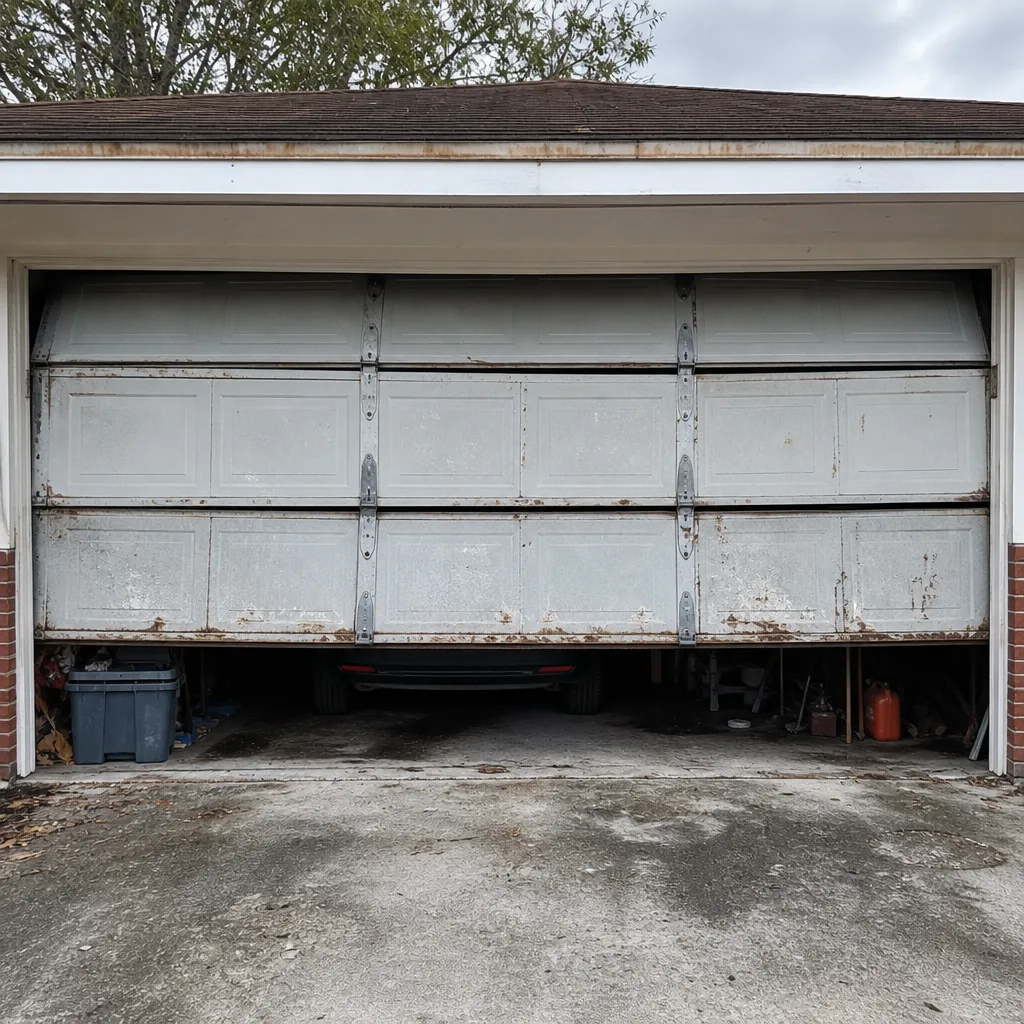 Before
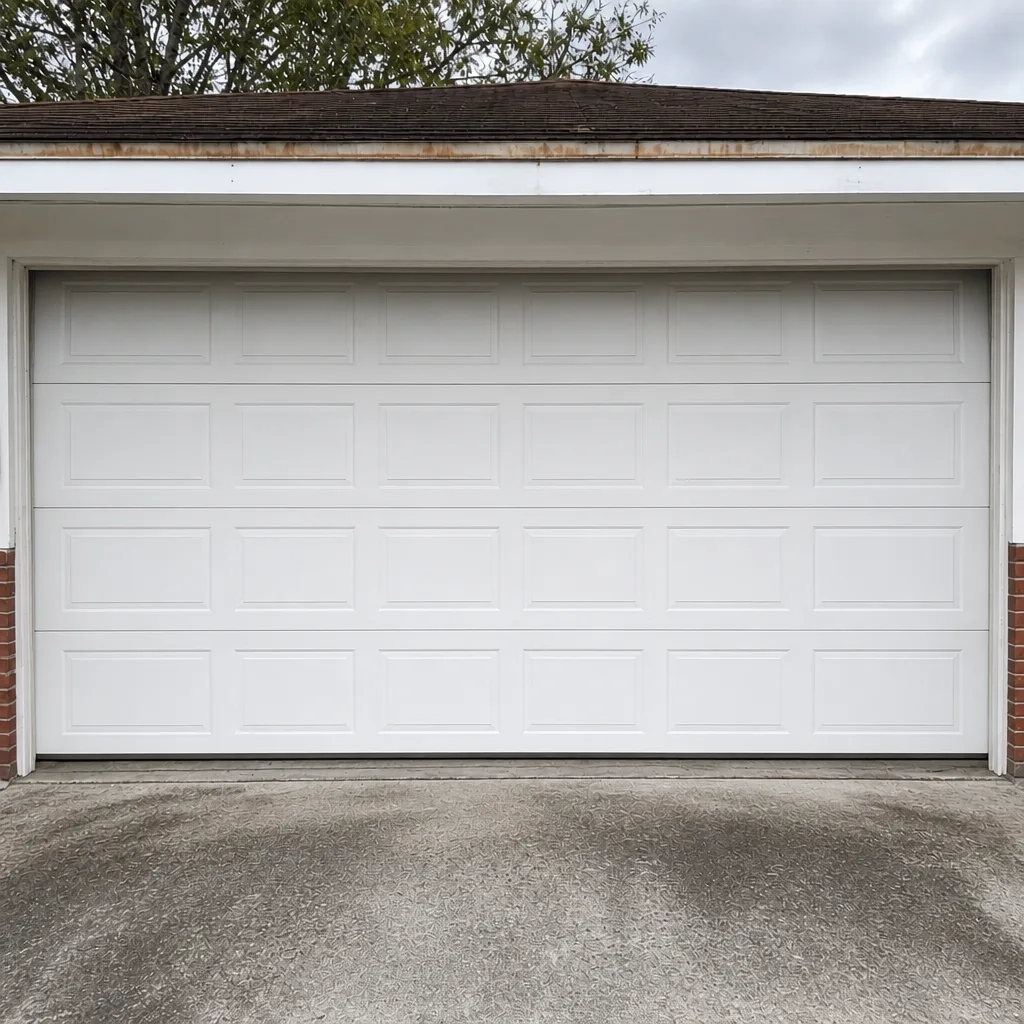 After
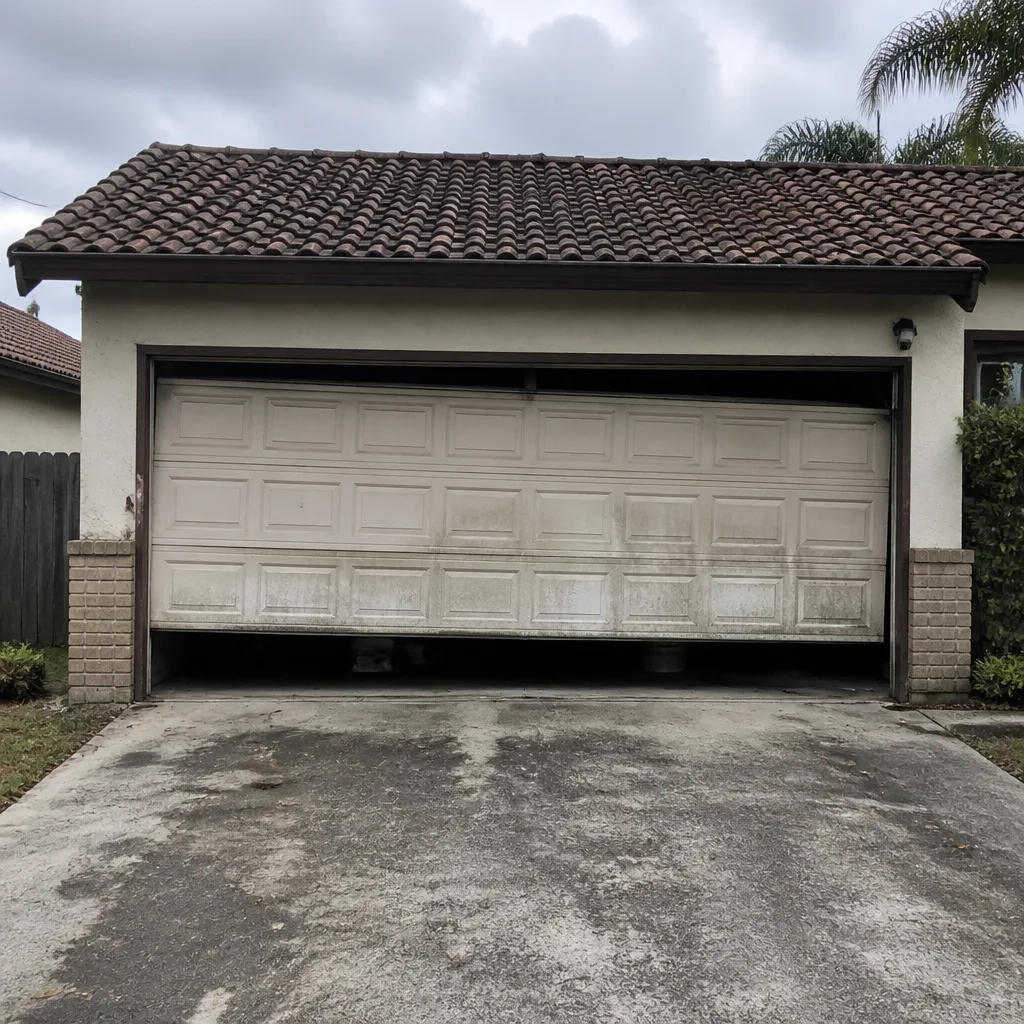 Before
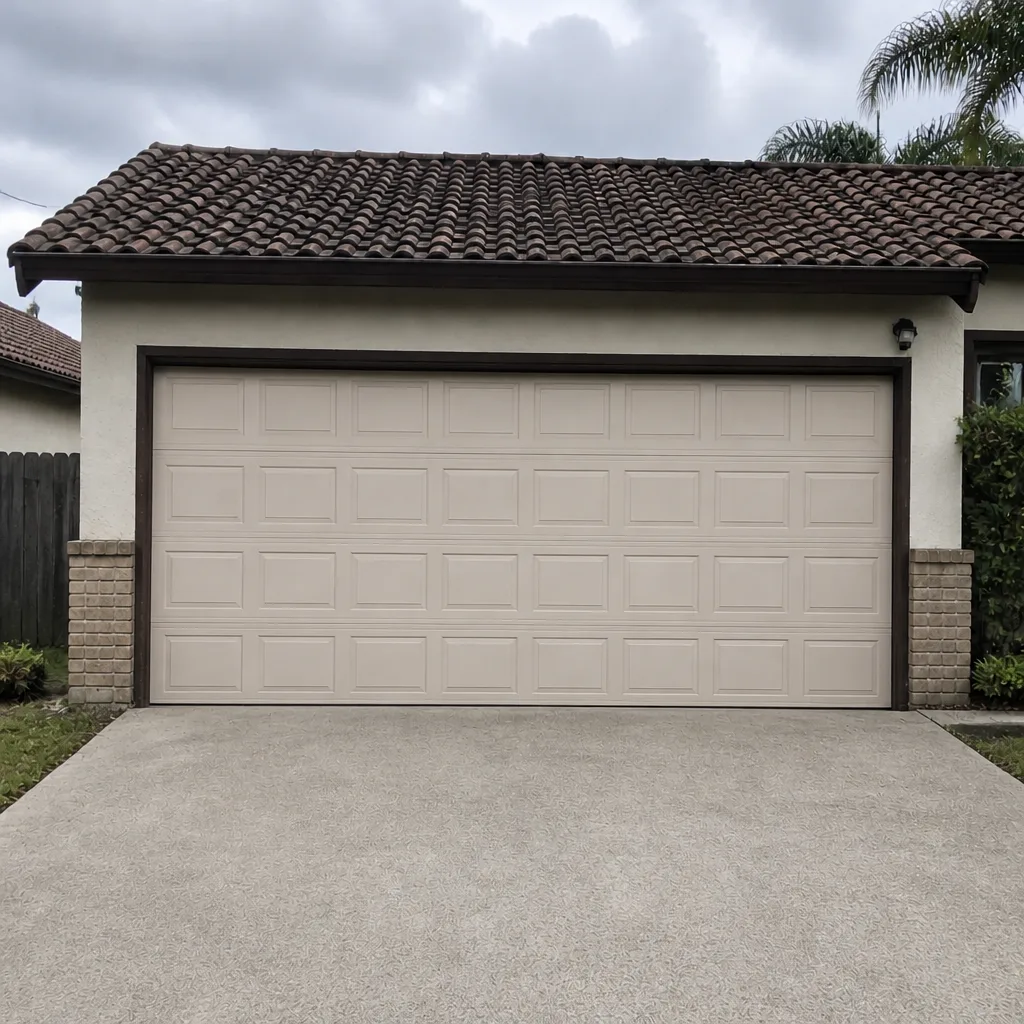 After
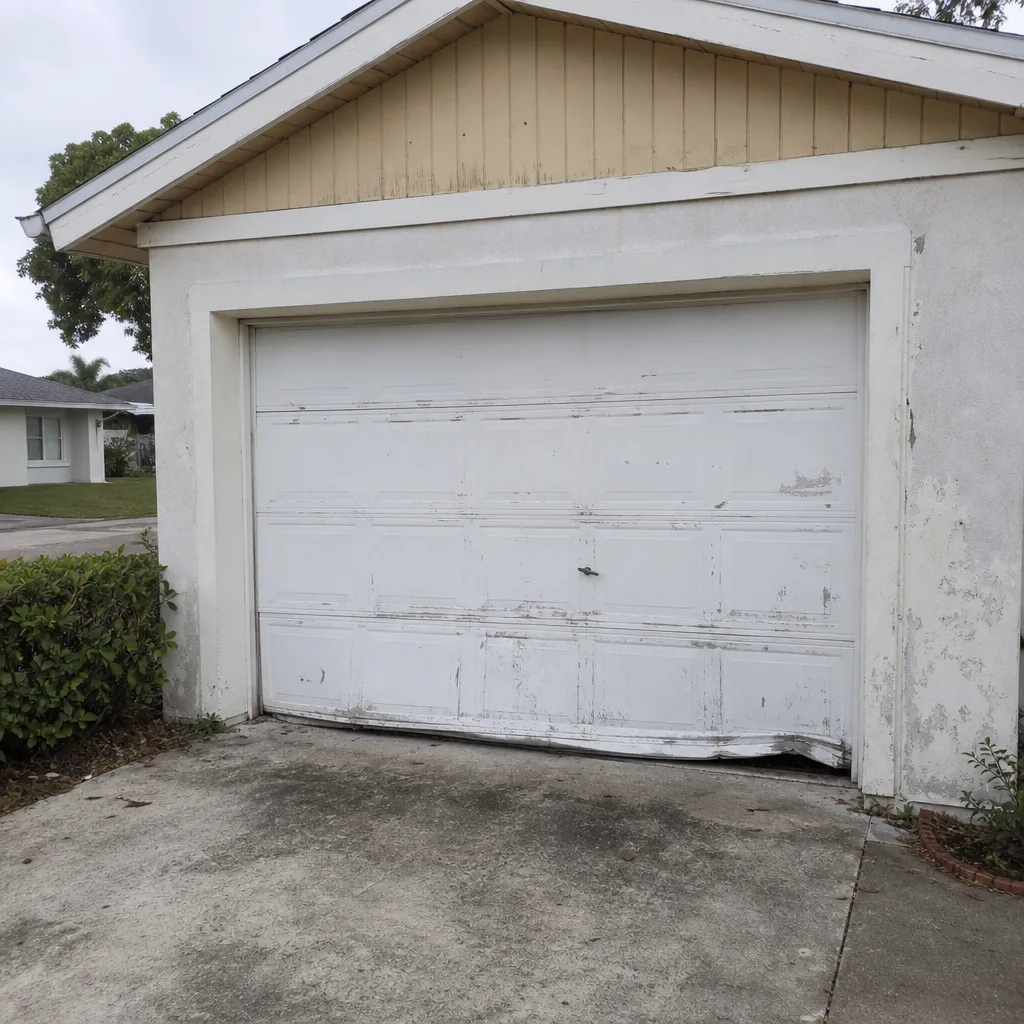 Before
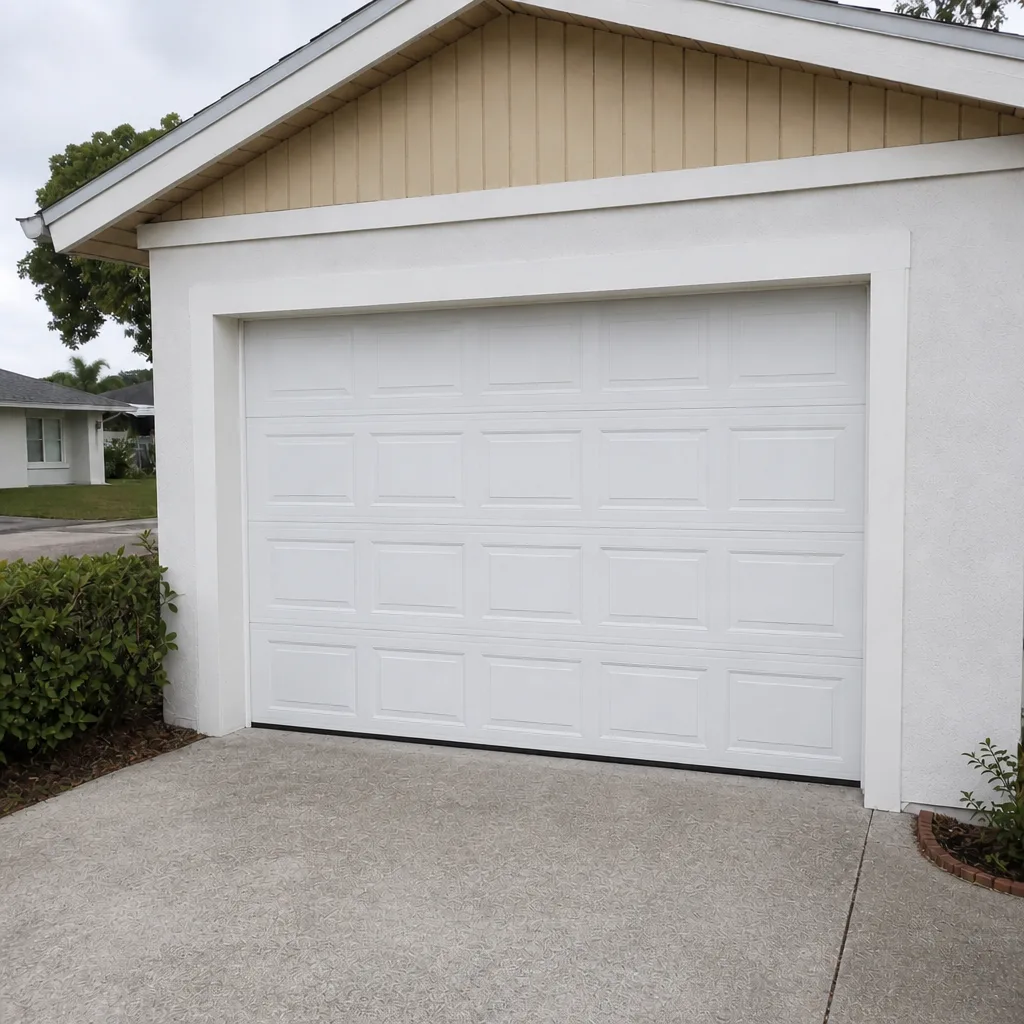 After
Common Mistakes to Avoid
- Following a northern maintenance calendar. Winter prep and spring cleaning take up most of a typical annual guide, and neither addresses what a Pembroke Pines door actually goes through. If your only garage door check is in the spring, you’re missing the two months that matter most for hardware and seal wear.
- Ignoring the bottom seal until it fails. The seal is the front line against water intrusion, and it’s the part that takes the most storm-season abuse. A cracked or flattened seal that’s allowed to stay in place lets water in with every heavy rain, and it can also let in pests. Replace it before the season, not after.
- Using grease or household oil on the moving parts. Grease and heavy oil collect grit and dust, which turns into an abrasive paste on hinges and rollers. Garage door lubricant is a specific product for a reason. Use that, and use it sparingly.
- Lubricating the tracks. The tracks are supposed to stay dry so the rollers roll. Lubricated tracks cause the rollers to slide and the door to run rough. Clean the tracks; don’t oil them.
- Checking or adjusting the springs or cables on your own. Torsion springs and the cables that wind on the drums hold serious stored energy. This is the single most dangerous part of a garage door, and spring work belongs with a trained technician. Call us instead. Our spring repair work is a core specialty for exactly this reason.
- Waiting until something fails to book dry-season work. The dry-season window is when non-emergency scheduling is easiest. The same repair that would have been a scheduled appointment in January becomes an emergency call in September when everyone in Pembroke Pines is trying to get a technician out.
- Treating a new sound or shudder as normal. A door that starts rattling, slowing at the top, or taking a second try to close is telling you something. Late summer is the worst time to ignore those signals, because the season has had the most time to work on them.
When to Call a Professional
Plenty of garage door care is homeowner work: washing the door, checking the bottom seal, clearing the tracks, tightening a loose hinge screw, applying lubricant. The rest of it isn’t. Call a technician when you find a bracket pulled out of the framing, a spring that’s stretched, broken or making a loud crack sound, a door that’s come off its track, a door that won’t open or close all the way, a safety reverse that fails the test, or a bottom seal that needs to be replaced (which is small, but the retainer needs to be handled correctly). Call immediately if the door is off the track, if any part is hanging, or if the opener is running and the door isn’t moving. And call before you consider touching a spring or cable, always. Pembroke Pines Garage Door Repair Co offers free estimates in Pembroke Pines – call (855) 529-2078. Same-day and emergency service is available for time-sensitive failures, and the price is quoted and agreed before any work starts.
Frequently Asked Questions
Twice a year is the right rhythm here: once in May before hurricane season, and once in the December-through-April dry window for tune-up and lubrication. That gives you a pre-season check and a post-season reset. If you notice a new sound, a slow close, or a rough spot in the door’s travel, that’s a reason to call between those checkpoints rather than waiting.
Yes. The May checklist is for every Pembroke Pines homeowner, not just those in a specific zone. Wind-driven rain, pressure swings, and airborne debris affect doors across the city regardless of evacuation status. The parts you’re checking – bottom seal, bracing, hardware, side and top weatherstripping – are the same parts that take the wear. If your door has a manufacturer’s wind rating label, it’s worth noting it before the season. Call (855) 529-2078 for a free estimate if you want the inspection done properly.
You can. Lubricating hinges, rollers and springs with a garage door-specific lubricant is a homeowner job, and it’s on the list of things to do in the dry season. What you should not do is touch the springs or cables. Use a proper garage door lubricant, not grease or household oil, and keep it off the tracks. If the door makes a sound you’re not sure about, that’s a call, not a lubrication question.
It’s usually one of three things: debris in the tracks, a spring that’s lost some of its tension, or an opener that needs its force and travel limits adjusted. There’s also a humidity factor; different parts expand and contract slightly at different rates. The way to know which one it is starts with a look at the door’s travel and the tracks. Our Pembroke Pines Garage Door Repair Co team handles all three, and an estimate will tell you which one you have. Call (855) 529-2078.
Yes, and year-round. National guides assume a summer and a winter that split the sun’s work. Here, UV is a factor across the whole year. Painted steel first shows it as chalky, faded paint and small chips at joints and edges. Vinyl panels fade and can become brittle. The fix isn’t complicated: wash the door, touch up chips as soon as you see them, and look closely at the edges and joints where moisture collects. If the finish is failing on multiple panels, get an estimate before the damage has spread.
When it’s cracked, flattened, torn away from its retainer, or when you can see daylight or feel a draft between the seal and the floor with the door closed. In Pembroke Pines, the bottom seal takes more abuse than most other door parts because it’s the first thing storm-driven water hits. It’s a small, inexpensive repair; doing it in the dry season protects your garage floor through the next wet season. Call (855) 529-2078 for a free estimate.
The Bottom Line
Pembroke Pines garage doors need a May pre-season check, mid-season spot checks in August and September, a November assessment, and a dry-season maintenance window from December through April. The parts that matter most are the bottom seal, the bracing and hardware, the hinges and rollers, and the springs and cables that should only ever be looked at, not touched, by a homeowner. Painted steel and vinyl panels take year-round sun here, so wash the door, touch up chips early, and get an estimate on finish failure before it spreads. Schedule the non-emergency work in the dry window. Call on the same day for a failure, especially if the door is off its track or the opener is running without moving the door. That’s the whole calendar, and it works.
Pembroke Pines Garage Door Repair Co works on the brand you already own, including LiftMaster, Chamberlain, Genie, Clopay, Amarr, Wayne Dalton, Craftsman and Raynor. We handle garage door repair, garage door opener repair, garage door installation, spring repair and emergency garage door service. Spring repair is done safely, by technicians whose experience with the specific components and tolerances of each brand runs up to 11 years. The whole door, from opener to panel, gets handled in one call. Whether you’re in May or in the middle of the dry season, the answer is the same: get an estimate. Free estimates are available, and the price is quoted and agreed before any work starts. Call (855) 529-2078 to schedule.
Written by the team at Pembroke Pines Garage Door Repair Co.